TL;DR: Z.ai's flagship GLM-5.3 is a post-training upgrade to the GLM-5.2 base, while GLM-5.3-Flash is a newly trained, natively multimodal mixture-of-experts model with 320 billion total parameters, 18 billion active parameters, a 1,048,576-position configuration, and MIT-licensed weights.[1][2][5][6] Flash's public configuration combines 34 KDA-style linear-attention layers, 11 layers named deepseek_sparse_attention, and DeepSeek's mHC technique.[6][9][10] That does not prove Chinese labs have surpassed the best U.S. systems. It shows how public weights, papers, and shared infrastructure can turn separate releases into a compounding engineering stack.
Here is the simple version. A normal chatbot answers one prompt. A coding agent has to keep working: read a repository, choose a file, call a tool, inspect the result, fix its own mistake, and try again. GLM-5.3 is Z.ai's large model for that kind of long, tool-using work. GLM-5.3-Flash is the cheaper multimodal model for doing more of it, including tasks that involve screenshots, documents, images, and video.[1][2]
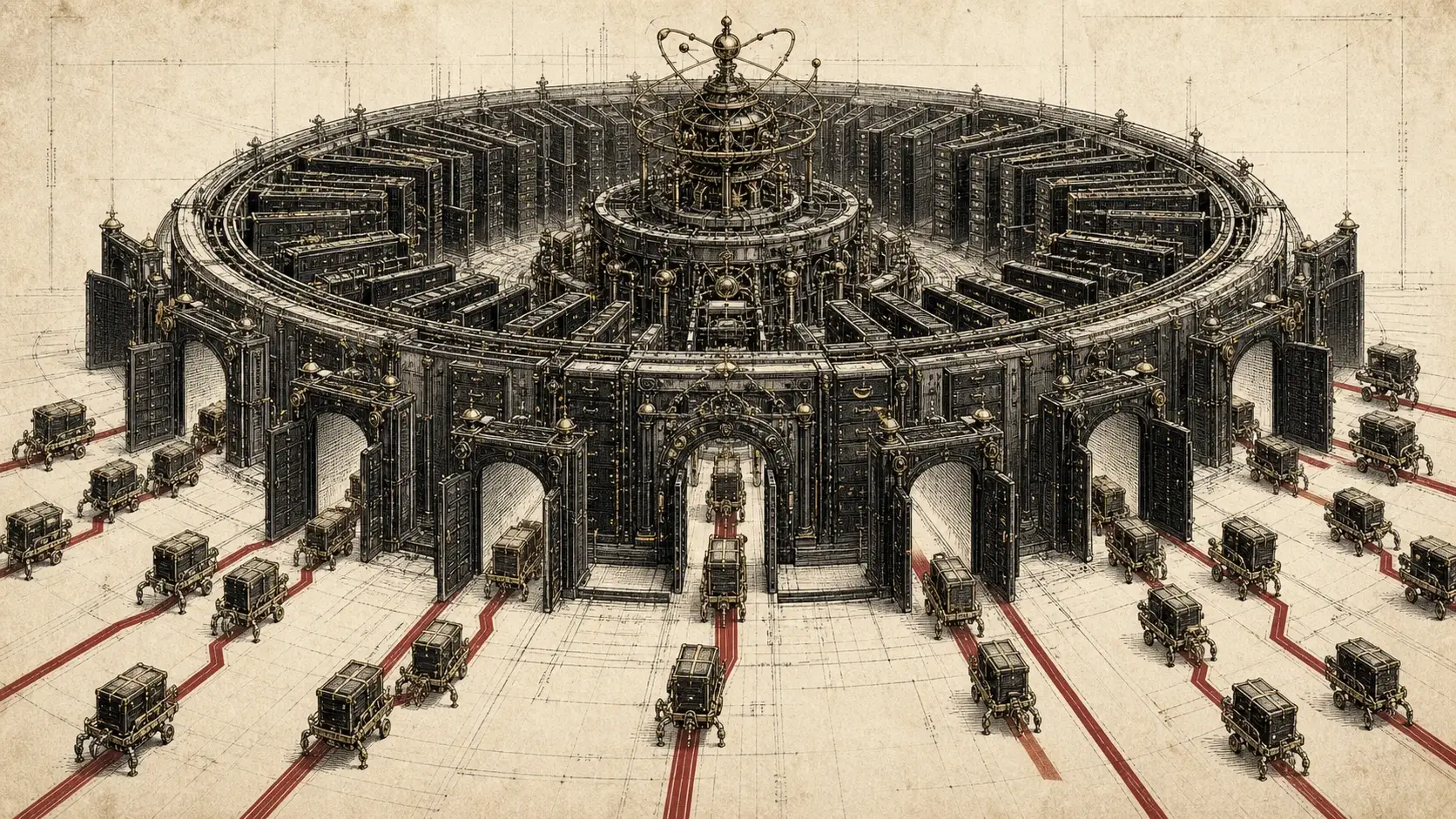
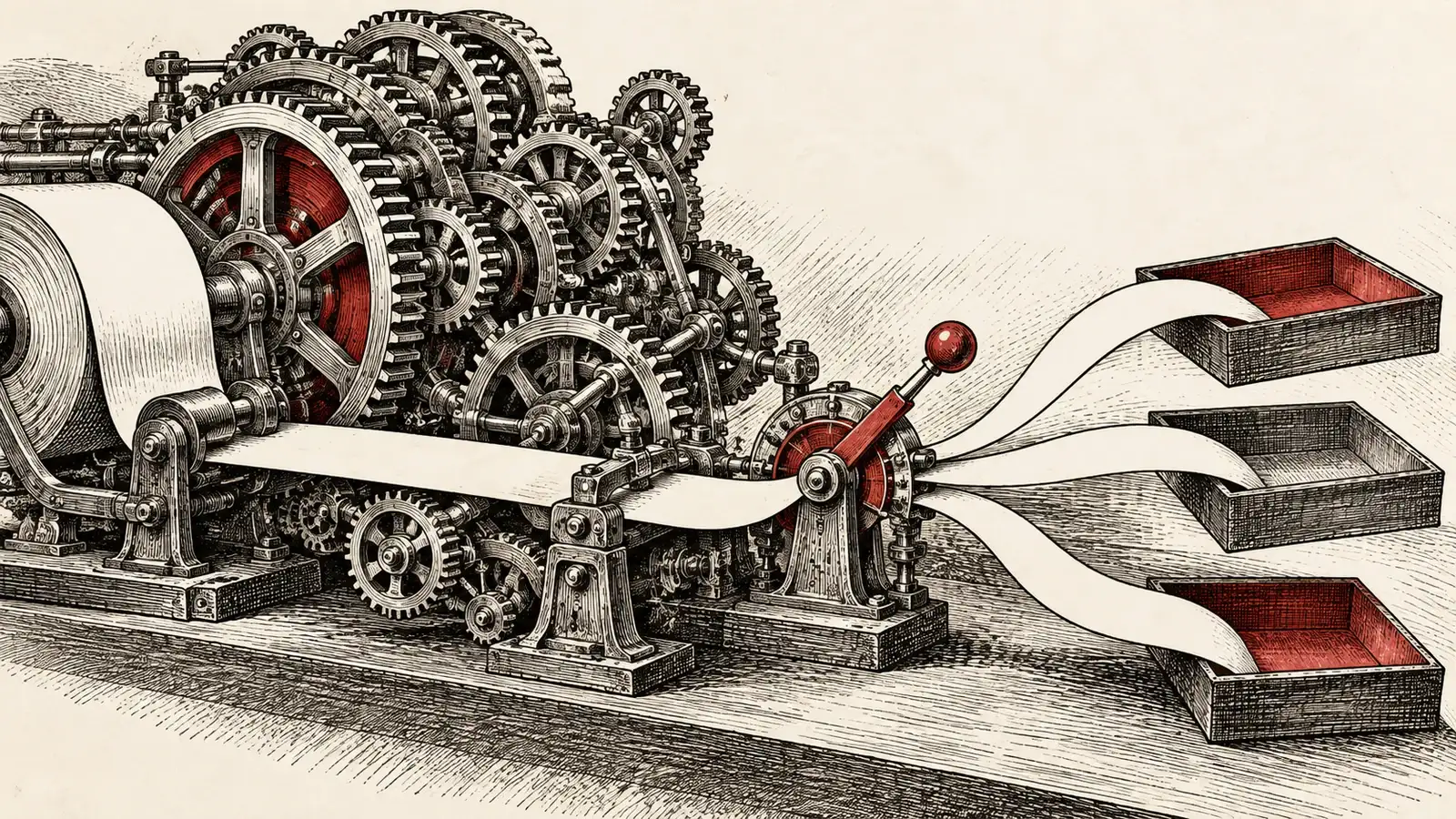
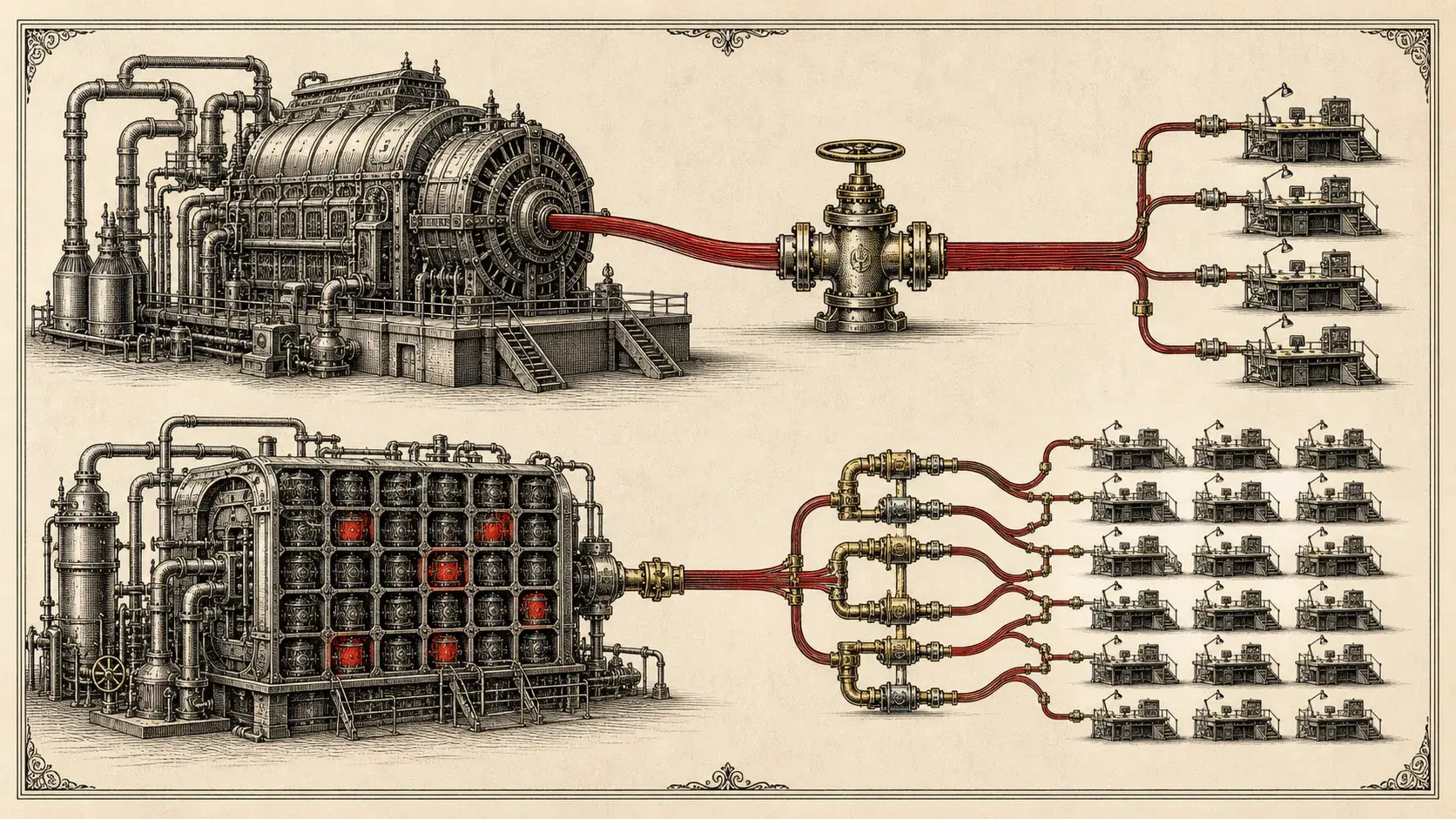
Now the machinery. Both models use a mixture of experts. Imagine a newsroom with hundreds of specialist desks. For each new word or code token, a router calls only a small group of desks instead of waking the entire building. Flash contains 320 billion parameters in total, but Z.ai says 18 billion are active for a token. Its public configuration shows 288 routed experts and selects eight, plus one shared expert, in its sparse layers.[5][6]
The real story isn't simply that another Chinese model scored well. It is that GLM-5.3-Flash visibly assembles ideas associated with multiple open research programs, publishes the result under MIT, and plugs into a toolchain already serving GLM, Qwen, DeepSeek, and Llama models. While the leading U.S. API labs keep their frontier weights sealed, Chinese labs are increasingly turning model architecture into a shared public construction site.
Why This Matters Now
Open weights change who gets to improve a model. A closed API can collect enormous private product feedback, but outside developers cannot inspect its weights or rebuild its serving path. Flash gives researchers a downloadable checkpoint, an inspectable configuration, and documented routes through SGLang, vLLM, Transformers, KTransformers, TokenSpeed, and Unsloth.[5] The advantage is not automatic. It is the number of additional experiments the release makes possible.
Two Releases: The Flagship Learns, Flash Rebuilds
Z.ai announced GLM-5.3 on August 14 and GLM-5.3-Flash on August 26. Treating them as a big and small version of the same model misses the point.
GLM-5.3 uses the same base model as GLM-5.2. Z.ai says every gain came from scaling post-training: more environments, more varied long-horizon tasks, and more compute spent on reinforcement learning after the base model already existed.[1] This is the industrial lesson of the release. Frontier progress is no longer synonymous with training a new base model from zero.
Flash starts from a newly trained base. It cuts the reported total parameter count from the flagship repository's displayed 753 billion to Z.ai's 320 billion figure, cuts the active count to 18 billion, reduces the language stack to 45 layers, adds a native vision encoder, and changes the attention architecture.[2][3][5][6]
GLM-5.3 And Flash Are Different Products
| Feature | GLM-5.3 | GLM-5.3-Flash | Why it matters |
|---|---|---|---|
| Base-model strategy | GLM-5.2 base, new post-training | Newly trained multimodal base | One improves the worker; the other redesigns the machine |
| Modalities | Text input and output | Text, image, video and file input; text output | Flash can operate on visual interfaces and documents |
| Published scale | 753B displayed by Hugging Face | 320B total, 18B active reported by Z.ai | Repository metadata and vendor counting conventions differ |
| Context configuration | 1M API context | 1,048,576 maximum positions | Provider limits and output budgets still vary |
| Weight license | Custom GLM-5.3 license | MIT | Both are public weights, but only Flash uses a standard permissive license |
| Primary job | Maximum coding, long-horizon work, cyber evaluation | Lower-cost coding, multimodal agents, high-volume deployment | Capability and serving economics are separate product decisions |
The licenses also tell two different stories. GLM-5.3's custom license grants broad rights to use, modify, distribute, fine-tune, and create derivatives. It adds a security-review condition for certain Model-as-a-Service businesses whose aggregate revenue exceeds $10 billion over a consecutive 12-month period.[4] Flash's official repository carries the standard MIT license.[5]
Let's be clear: public weights are not the same as a fully open training system. Z.ai has not published the complete 30-trillion-token multimodal corpus, every training environment, or a reproducible end-to-end training log. “Open source model” is therefore too broad. “Open weights with inspectable configuration and deployment guidance” is accurate.
How Flash Works: A Notebook, An Index, And A Specialist Desk
Flash has three mechanisms worth understanding without the alphabet soup.
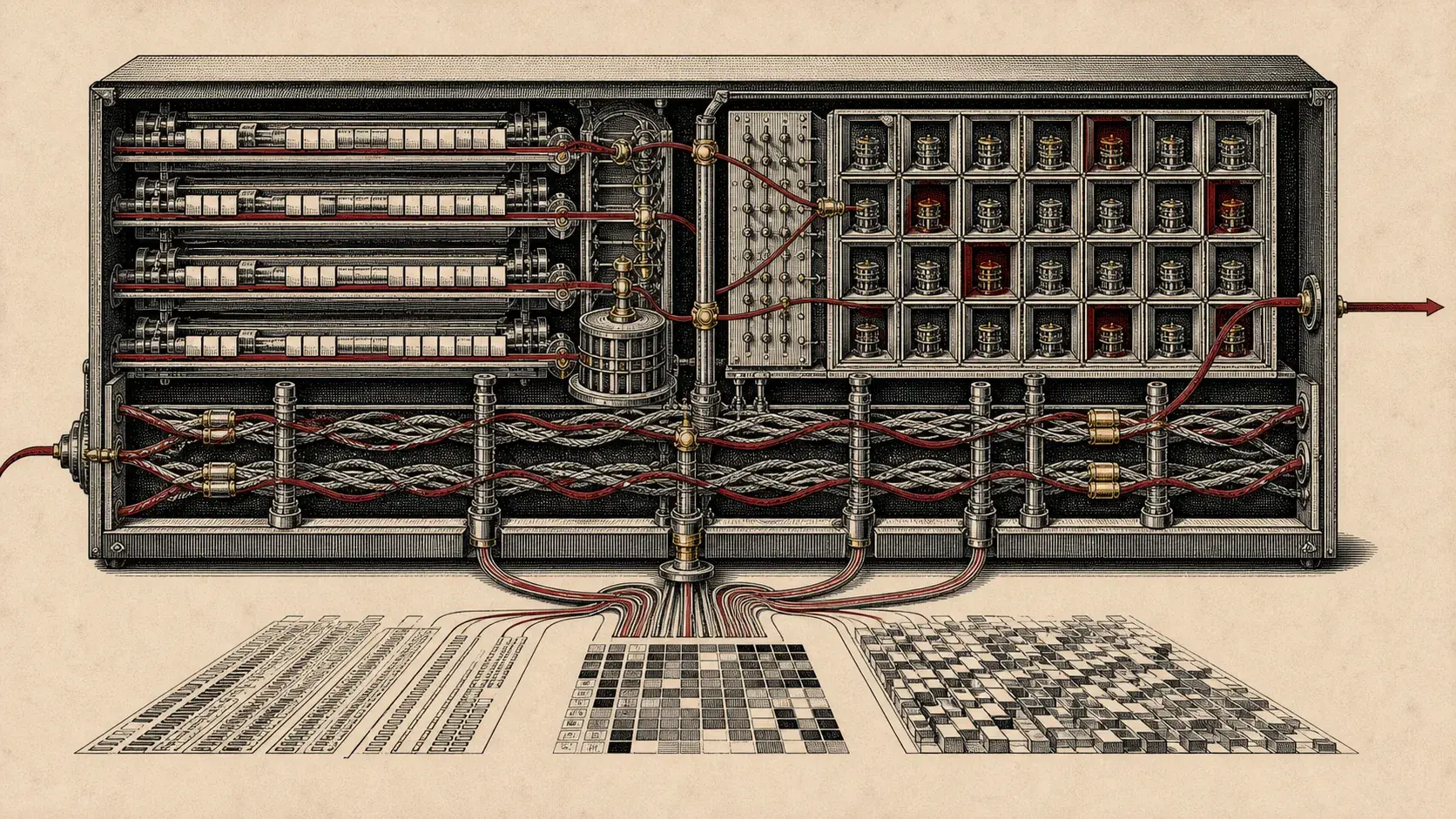
First, Kimi Delta Attention, or KDA, behaves like a rolling notebook. Instead of storing every past token in an ever-growing stack, it updates a compact state as new information arrives. Moonshot's Kimi Linear paper reported up to 75% lower KV-cache use and as much as 6x decoding throughput at one-million-token context in its own controlled comparison.[10] Those are Kimi Linear results, not measured Flash gains. Flash's configuration nevertheless exposes 34 KDA layers, making the architectural relationship inspectable.[6]
Second, sparse attention behaves like an index. A long codebase may contain one earlier line that matters. Instead of comparing every new token with the entire million-token history, Flash's 11 sparse layers use an indexer to retrieve a limited set of relevant positions for more expensive attention. The configuration names those layers deepseek_sparse_attention and sets a top-k value of 2,048 positions.[6]
Third, the mixture-of-experts router chooses eight of 288 routed experts for a token, plus a shared expert. That is the specialist desk. The result is a model with much more stored capacity than active computation for one token.
The released Flash configuration alternates 34 KDA-style linear-attention layers with 11 layers named deepseek_sparse_attention. Architecture is inspectable; performance remains workload-dependent.
Flash also uses Manifold-Constrained Hyper-Connections, or mHC. A normal residual connection is a direct path that helps information and gradients survive through many layers. mHC widens that path into several streams, then constrains how the streams mix so training remains stable. The original paper lists a DeepSeek corresponding author, and Flash's public configuration sets mhc to true.[9][6]
Here's the genius: linear attention keeps a cheap running state, sparse attention searches globally when precision matters, experts concentrate compute, and mHC stabilizes information flow. Z.ai reports that this design uses 3.0x lower normalized attention compute and 4.4x lower average BF16 KV-cache size per layer than GLM-5.3.[2] Those are architecture proxies, not proof that every deployment is three times faster or 4.4 times cheaper.
The Open Relay: Z.ai Is Building On A Public Stack
The uncomfortable truth for the closed-model narrative is visible in the filenames.
Flash's configuration does not hide its influences behind vague marketing. It names DeepSeek sparse-attention layers. It enables mHC, another DeepSeek-published technique. Its KDA layers belong to an attention family published by Moonshot. Z.ai then releases the combined model under MIT.[6][9][10]
That does not establish copied code or shared training data. It establishes something more important for strategy: the design space is public enough for separate labs to recombine named mechanisms.
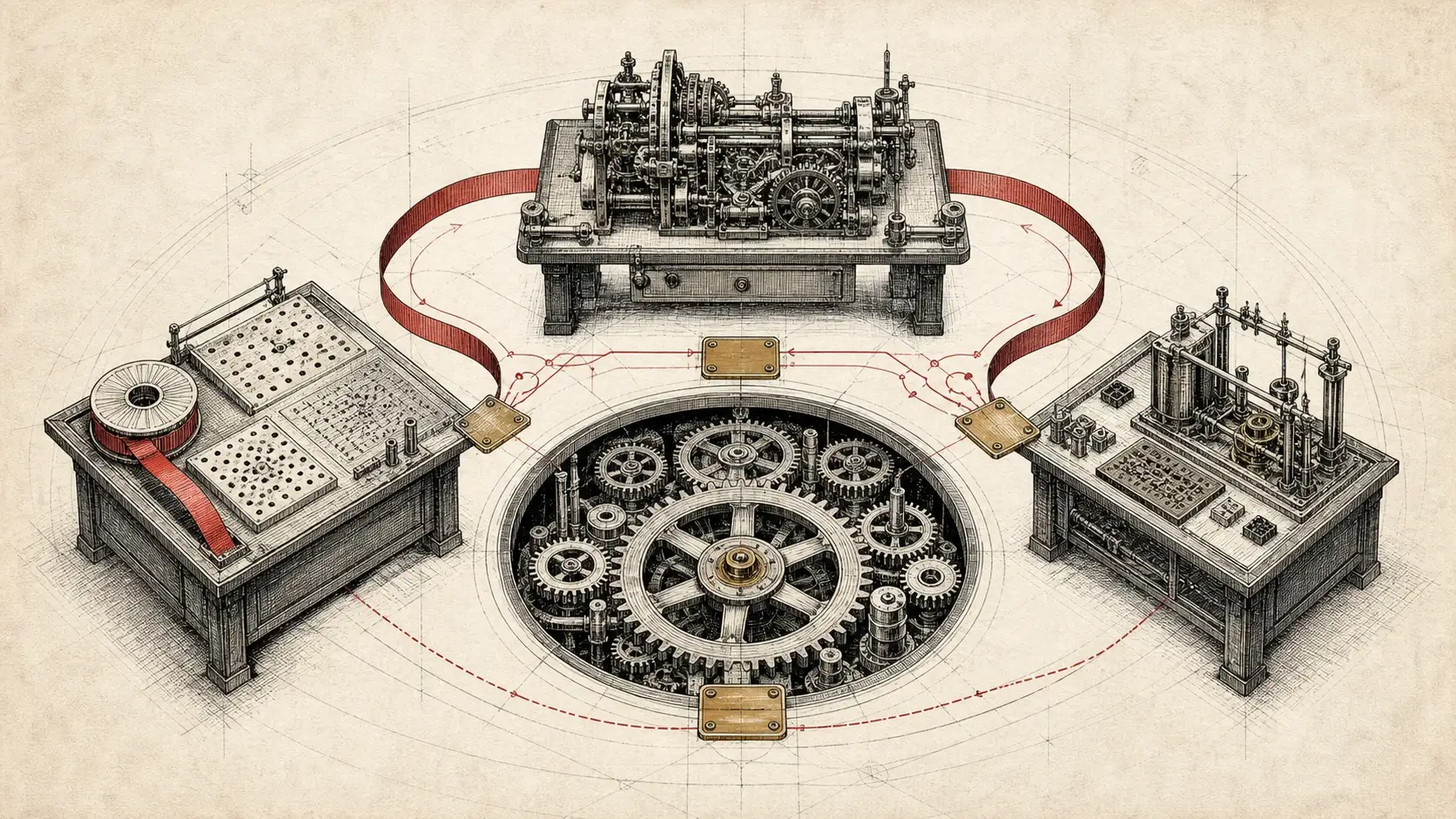
The training stack compounds too. Z.ai's open slime framework connects Megatron on the training side with SGLang on the rollout side. Its repository says the same framework supports GLM models, Qwen models, DeepSeek V3 and R1, and Llama 3.[11] A training fix, rollout optimization, or debugging practice no longer has to live inside one model family.
DeepSeek supplied an even cleaner example of cross-lab reuse in 2025. It released R1-distilled checkpoints based on Alibaba's Qwen2.5 models and Meta's Llama models, with DeepSeek reasoning samples used for fine-tuning.[12] That is not evidence about GLM-5.3's training lineage. It is proof that open weights can turn one lab's base model into another lab's product.
What's often overlooked is how quickly infrastructure follows the checkpoint. Flash's official model card documented SGLang, vLLM, Transformers, KTransformers, TokenSpeed, and Unsloth paths at release.[5] Community deployments and bug reports appeared within days. That messy day-one activity is a feature of the open model, not a sign that the model was magically production-ready.
The strategic asset is not one open checkpoint. It is the ecosystem that turns one lab's release into another lab's starting point.
The Economics: Flash Makes Experimentation Cheap Enough To Spread
As of August 29, Z.ai lists GLM-5.3 at $1.40 per million fresh input tokens, $0.26 per million cached input tokens, and $4.40 per million output tokens. Flash's standard rates are $0.15, $0.03, and $0.50 for the same token classes.[7]
At list price, Flash is therefore 9.33x cheaper on fresh input, 8.67x cheaper on cached input, and 8.8x cheaper on output. A launch promotion halves Flash's rates to $0.075, $0.015, and $0.25 through September 9 at 24:00 UTC+8, widening the gap to between 17.33x and 18.67x depending on token class.[7]
GLM-5.3-Flash: The Deployment Snapshot
Architecture and API facts as of August 29, 2026. Vendor figures are labeled; provider performance can change.
Hugging Face displays 321B total under its counting metadata
A model setting, not a promise for every provider and concurrency level
Artificial Analysis v4.1.1 classifies Flash among leading large open-weight models
Below the 64.8 t/s median in Artificial Analysis' comparison class
Temporary promotion halves both rates through September 9 UTC+8
The license covers released artifacts, not unpublished training data
Note: Artificial Analysis measured a score of 57, 49.4 output tokens per second, 1.49 seconds to first token, and $0.09 per Intelligence Index task at list pricing on Z.ai's API. These are one route and one benchmark suite, not universal deployment guarantees.
Artificial Analysis independently reports an Intelligence Index score of 57, 49.4 output tokens per second, 1.49 seconds to first token, and $0.09 per weighted index task at list pricing on the Z.ai API.[8] It also records 150 million output tokens across the evaluation, above the 110-million median for comparable open-weight models. Flash is cheap and capable in that test. It is not unusually fast, and it is not terse.
The real story isn't that cheap tokens guarantee a good agent. They lower the price of finding out. More developers can run repository-scale trials, build quantizations, test alternative engines, and discover failure modes without paying flagship rates for every iteration. That expands the experiment pool from one lab to an ecosystem.
The Benchmark Boundary: Close Enough To Matter Is Not Ahead Everywhere
Z.ai reports that GLM-5.3 rose from 46.2 to 66.9 on DeepSWE v1.1 versus GLM-5.2, and from 4.6 to 28.3 on Terminal-Bench 3.0. It reports Flash at 63.4 on DeepSWE and 48.8 on AutomationBench v1.0.6, versus 46.2 and 26.2 for GLM-5.2.[1][2]
Those are meaningful vendor-reported gains under the disclosed GLM harnesses. They are not a clean global leaderboard. Z.ai's table mixes model snapshots, native agent harnesses, timeouts, context-management policies, rollout counts, tools, and judge models. Several comparator settings remain undisclosed.
The same tables puncture the easiest triumphalism. Z.ai reports GPT-5.6 Sol at 34.6 on Terminal-Bench 3.0 versus GLM-5.3 at 28.3. Fable 5 reaches 69.7 on DeepSWE versus 66.9 for GLM-5.3. On Z.ai's private Code Bench at maximum effort, Flash scores 29.0% versus 29.5% for Claude Opus 4.8.[1][2] The gap has compressed in selected agentic settings. It has not disappeared.
Do Not Turn A Vendor Table Into A National Scoreboard
Z.ai discloses useful settings for several GLM runs, but it does not establish matched model versions, prompts, tools, hardware, precision, sampling, rollout counts, time budgets, speculative-decoding acceptance, time to first token, or tail latency for every comparison row. Treat the figures as separate deployment signals. The article's open-ecosystem thesis does not require pretending that incomparable scores form a fair ranking.
The cyber results deserve an extra boundary. Z.ai reports GLM-5.3 at 84.5% on CyberGym and 54.4% on ExploitBench, up from 77.2% and 24.4% for GLM-5.2.[1] It delayed the weight release for additional safety evaluation and hardening, then attached a security-review clause to the flagship license for some very large model-service companies.[4] Open iteration increases defensive access. It also reduces the original lab's control over how capable weights are modified and used.
The Strategic Verdict: America Still Has Flywheels Too
The strongest version of the argument is not “China has won.” It is “China's leading open-weight labs are learning how to compound in public.”
The U.S. still holds formidable advantages. OpenAI, Anthropic, Google, and xAI can learn from private product traffic, enterprise deployments, integrated coding tools, proprietary data, custom silicon, and internal research that competitors never see. Closed systems can move quickly because one company controls the entire stack. Meta remains a major U.S. open-weight exception. vLLM, SGLang, Hugging Face, Megatron, PyTorch, and the broader serving ecosystem are also global or U.S.-rooted projects, not Chinese property.
But closed frontier labs ask outsiders to rent the result. Z.ai, DeepSeek, Moonshot, and Alibaba increasingly publish enough of the result for outsiders to inspect, run, recombine, distill, and optimize it. The competition is therefore asymmetric:
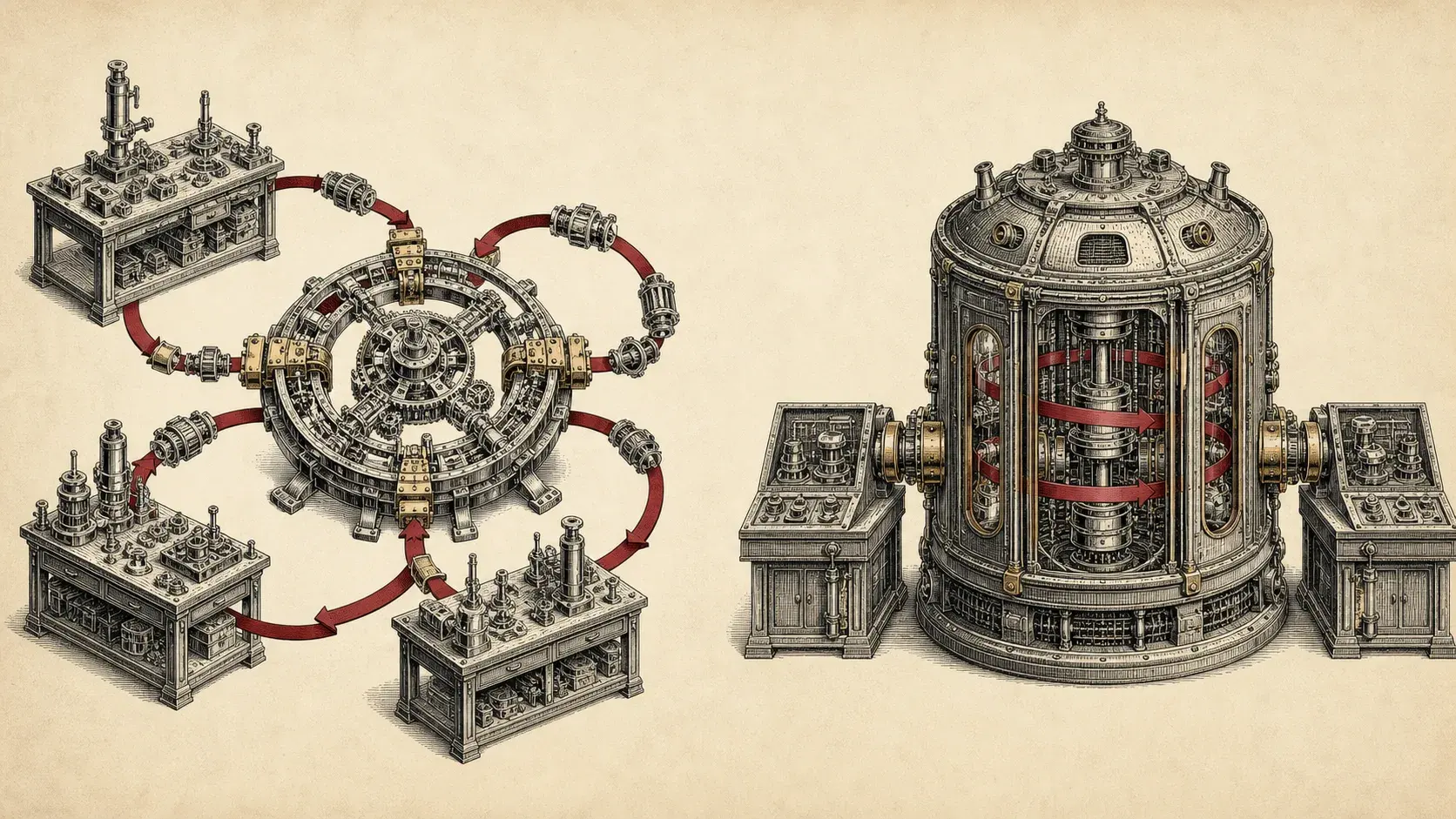
Two Different AI Compounding Machines
| Feature | Closed frontier flywheel | Open-weight flywheel | Who wins when |
|---|---|---|---|
| Feedback | Private product and enterprise telemetry | Public issues, forks, integrations, and deployments | Closed wins on clean proprietary signals; open wins on experiment diversity |
| Coordination | One company controls model, product, and infrastructure | Many actors coordinate through artifacts and interfaces | Closed can move coherently; open can explore more branches |
| Distribution | API access and bundled applications | API access plus self-hosting and derivative weights | Open expands deployment choice; closed reduces operator burden |
| Economics | Premium price supports frontier investment | Competition and self-hosting pressure token prices | Closed wins on margins; open can win on adoption |
| Control and safety | Provider can gate, monitor, and revoke | Weights can be modified after release | Closed retains control; open broadens access and risk |
Here's the bet. If Chinese labs keep releasing capable weights, keep their licenses usable, keep sharing architecture and infrastructure, and keep getting enough compute to train the next generation, each lab can inherit more public work than the one before it. The closed U.S. lab must outrun an ecosystem, not one rival.
That outcome is not preordained. Open projects can fragment. Quantizations can degrade quality. Benchmarks can be gamed. Security incidents can force tighter licensing. Hardware constraints can stall training even when ideas are abundant. The word “could” in the headline is doing real work.
The real story isn't whether GLM-5.3 owns the benchmark crown on August 29. It is whether public model engineering can compound faster than private model advantage. Flash is the clearest artifact yet that this is no longer a theoretical question.
What To Actually Take Away
GLM-5.3 and Flash are different releases: one is a post-training upgrade, the other a newly trained multimodal architecture optimized for cheaper deployment.
Flash's public configuration visibly combines KDA-style linear attention, layers named for DeepSeek sparse attention, mHC, sparse experts, and a native vision encoder.
Flash is MIT-licensed; GLM-5.3 uses a custom license with a security-review condition for some Model-as-a-Service companies above $10B in revenue.
Z.ai's benchmark gains are promising vendor evidence, not an apples-to-apples national leaderboard. Closed U.S. models remain ahead on several hard rows even in Z.ai's table.
The durable competitive question is whether public weights and shared infrastructure shorten the next model cycle more than proprietary data and integrated products do.
Sources & References
Primary sources establish release facts, architecture, licensing, and the open-innovation links. Vendor benchmarks are labeled; independent measurements are separated.
| # | Source | Outlet | Date | Key Takeaway |
|---|---|---|---|---|
| 1 | Z.ai Z.ai | August 14, 2026 | Primary launch source for the unchanged base, scaled post-training, coding results, cyber evaluations, and benchmark conditions. | |
| 2 | Z.ai Z.ai | August 26, 2026 | Primary launch source for Flash architecture, multimodality, efficiency proxies, Ox Alpha preview, serving claims, and vendor benchmarks. | |
| 3 | Hugging Face Z.ai | Accessed August 29, 2026 | Official public weights, repository metadata, model card, and documented local-serving paths. | |
| 4 | Hugging Face Z.ai | 2026 | Custom license with broad reuse rights and a security-review condition for certain Model-as-a-Service businesses above $10B revenue. | |
| 5 | Hugging Face Z.ai | August 26, 2026 | Official 320B/18B description, MIT license, deployment integrations, benchmark footnotes, and multimodal usage. | |
| 6 | Hugging Face Z.ai | Accessed August 29, 2026 | Inspectable evidence for 45 layers, 34 KDA layers, 11 deepseek_sparse_attention layers, mHC, expert routing, vision configuration, and 1,048,576 positions. | |
| 7 | Z.ai Developer Documentation Z.ai | Accessed August 29, 2026 | Current per-million-token prices and the Flash promotion ending September 9 at 24:00 UTC+8. | |
| 8 | Artificial Analysis Artificial Analysis | August 2026 | Independent route measurement: Intelligence Index 57, 49.4 output tokens per second, 1.49-second TTFT, and $0.09 measured task cost. | |
| 9 | arXiv DeepSeek researchers | December 2025 | Primary paper for the mHC residual-stream method enabled in Flash. | |
| 10 | arXiv Moonshot AI researchers | October 2025 | Primary paper for Kimi Delta Attention and its controlled long-context efficiency results. | |
| 11 | GitHub Z.ai / THUDM contributors | Accessed August 29, 2026 | Open RL framework connecting Megatron and SGLang, with support listed for GLM, Qwen, DeepSeek, and Llama families. | |
| 12 | Hugging Face DeepSeek AI | January 2025 | Primary evidence of R1-distilled checkpoints built on Qwen2.5 and Llama bases, demonstrating documented cross-lab open-weight reuse. | |
| 13 | GitHub DeepSeek AI | 2025 | Primary repository for DeepSeek Sparse Attention research and released inference artifacts. | |
| 14 | X Z.ai | August 26, 2026 | Official social announcement confirming Flash specs, MIT weights, Ox Alpha identity, and Z.ai's Chinese-accelerator serving claim. | |
| 15 | vLLM vLLM Project | August 2026 | Independent serving recipe documenting hardware, precision, MTP, and long-context deployment constraints. |
Last updated: August 29, 2026