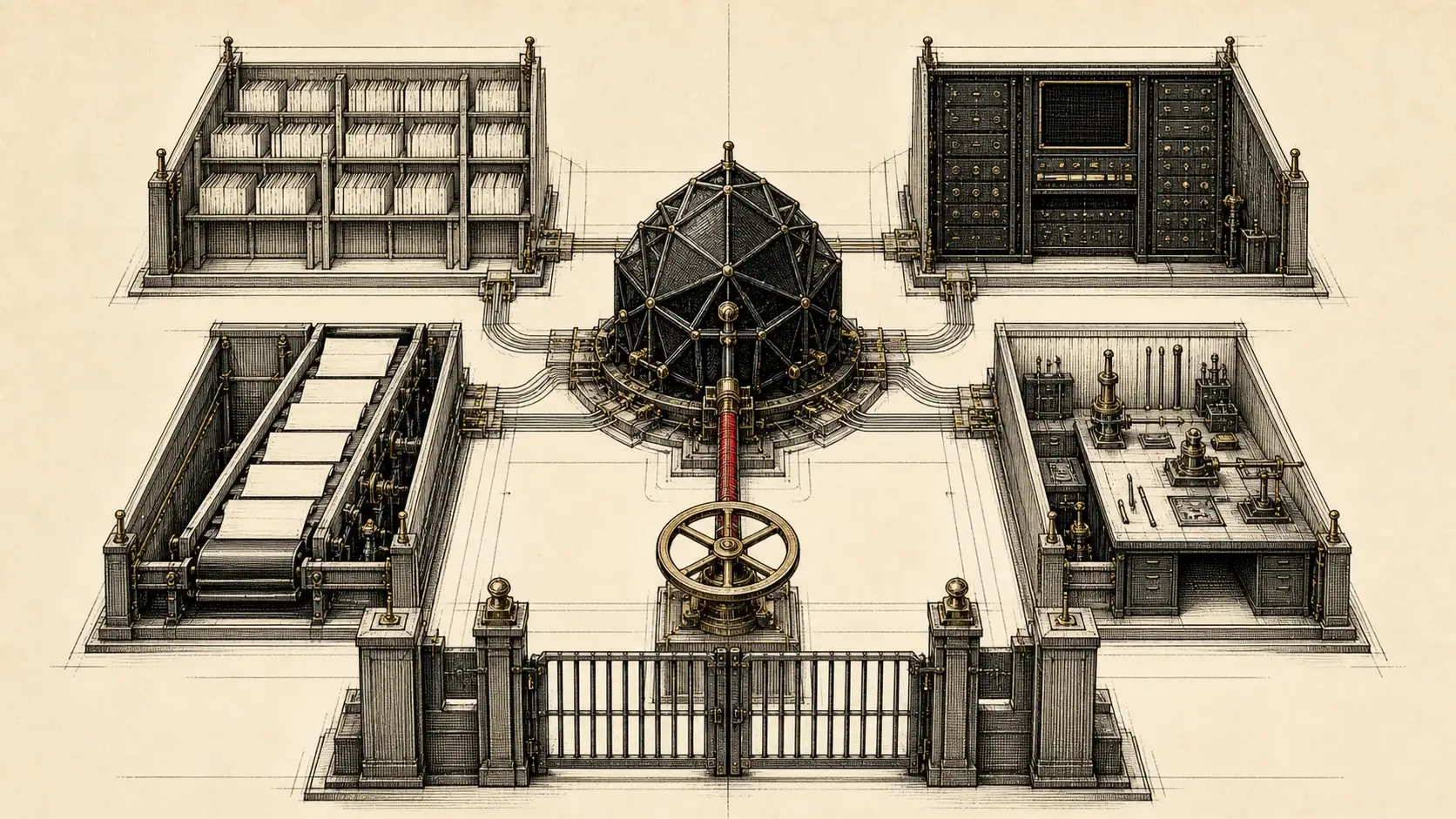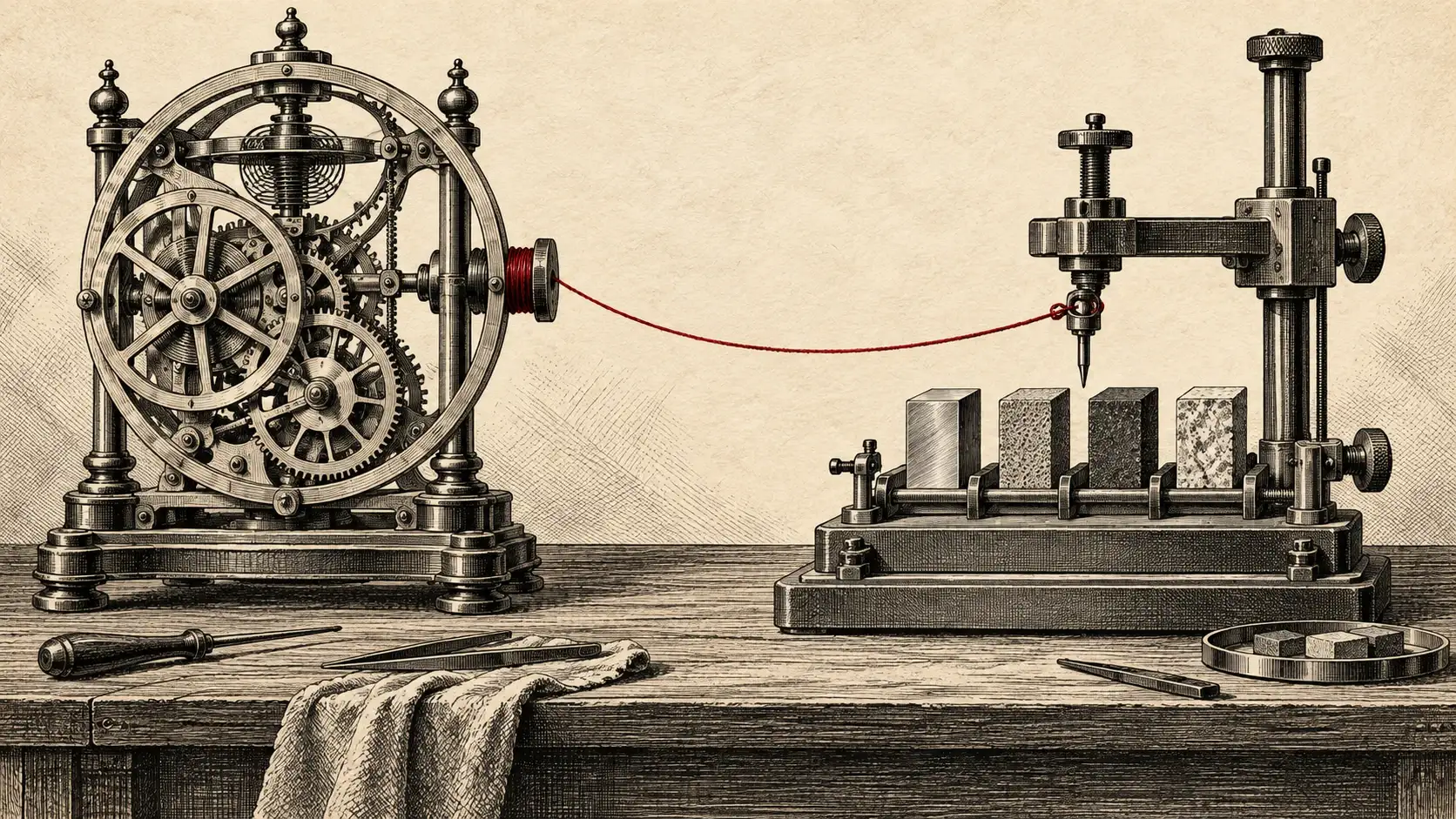
TL;DR: Grok 4.6 scores 61 on Artificial Analysis' Intelligence Index, supports a 500,000-token context window, and starts at $2 per million input tokens and $6 per million output tokens.[1][4][5] The real story isn't another five-point vendor-reported gain over Grok 4.5. It is xAI's attempt to pair a frontier model with Grok Bot, a separate beta product that gives persistent agents a shared cloud computer, durable sessions, reusable routines, and approval gates.[6][7]
xAI did not release one product in August. It released two different layers of an agent business.
Grok 4.6 arrived on August 12 as a model for coding, research, knowledge work, and long-running tool use. It shipped through the xAI API, Grok Build, Cursor, and model gateways including OpenRouter, Vercel, and Cloudflare.[1][3] One day earlier, Grok Bot entered early beta as a computer-using agent product for a limited set of SuperGrok and Cursor subscribers.[6]
That distinction is not semantic. xAI does not say Grok Bot runs Grok 4.6, and Grok 4.6 was not initially released inside the consumer Grok experience on X. The model, the Bot, and the familiar Grok assistant on X are three different product surfaces. Treating them as one magical system makes the launch sound simpler than it is, and much more proven than the evidence allows.
Why This Matters Now
Model parity is becoming table stakes. Grok 4.6 is close enough to the frontier, and cheap enough at its base rate, to make xAI a credible supplier. Grok Bot is the more consequential wager because it turns model output into persistent work inside real systems. The value moves from answer quality to accepted results, while the risk moves from a bad paragraph to a bad action.
The Model: What Grok 4.6 Actually Does
Grok 4.6 accepts text and images and produces text. The API supports configurable low, medium, high, and xhigh reasoning effort, plus function calling, structured outputs, web search, X search, and code execution.[3] xAI positions it for coding, agentic tasks, and knowledge work rather than consumer chat alone.
The model's advertised 500,000-token context window is useful for repositories, document collections, and long tool traces. It also comes with a pricing trap that the launch headline hides. Requests below 200,000 prompt tokens cost $2 per million input tokens, $0.50 per million cached input tokens, and $6 per million output tokens. Once a prompt reaches 200,000 tokens, xAI charges $4, $1, and $12 respectively for every token in that request.[4]
The uncomfortable truth is that a context ceiling is not an economic target. Filling 500,000 tokens can double the entire request's token rate before search calls, retries, tools, and review enter the bill. Teams should use prompt caching and context compaction because the cheapest token is the one the agent does not need to reread.[3]

Grok 4.6 By The Numbers
Independent Artificial Analysis measurements are separated from xAI's API specifications. None of these values guarantees a specific production workload.
Artificial Analysis' independent composite result for Grok 4.6 at high reasoning.
Documented maximum prompt length for text and image input.
Artificial Analysis measured generation speed after the first token.
Artificial Analysis' weighted benchmark cost, not a universal production task price.
xAI says a longer supplemental training run used curated model-generated reasoning material, engineering data, a revised optimizer, regenerated supervised trajectories, and reinforcement learning across coding, knowledge work, web development, kernel optimization, and computer-aided design.[1][2] Cursor, xAI's training and launch partner, repeats the same long-horizon emphasis in its own release account.[11] The claimed behavioral result is more important than the recipe: longer task persistence, stronger first passes on interactive applications, and more self-testing before the model moves on.
Those are vendor observations. They are plausible, strategically important, and still not a substitute for independent acceptance-rate data on real repositories and business workflows.
The Evidence: Better Than Grok 4.5, Not Better At Everything
The cleanest answer to "how is Grok 4.6 better?" is narrower than xAI's marketing language. On xAI's published table, Grok 4.6 beats Grok 4.5 on every listed row. The gains include 11.9 percentage points on DeepSWE 1.1, 10.4 points on APEX-Agents, 10.3 points on Terminal-Bench 3.0, and 227 Elo on GDPVal-AA v2.[1]
xAI's Published High-Reasoning Snapshot
| Feature | Grok 4.5 | Grok 4.6 | GPT-5.6 Sol |
|---|---|---|---|
| AA Intelligence Index | 56 | 61 | 61 |
| GDPVal-AA v2 | 1526 | 1753 | 1728 |
| CursorBench v3.2 | 66.7% | 69.9% | 67.2% |
| DeepSWE v1.1 | 54.0% | 65.9% | 73.0% |
| FrontierCode v1.1 Extended | 56.6% | 61.3% | 60.6% |
| APEX-Agents | 47.1% | 57.5% | 56.7% |
| Terminal-Bench v3.0 | 15.7% | 26.0% | 34.6% |
All values above come from xAI's August 12 launch table. xAI says competitor figures are the best self-reported or publicly available results. The table does not establish a common provider, hardware stack, precision, prompt and output length, decoding configuration, concurrency level, time to first token, tail latency, or uniform agent harness for every model. Read each row as a deployment signal, not a normalized universal ranking.[1]
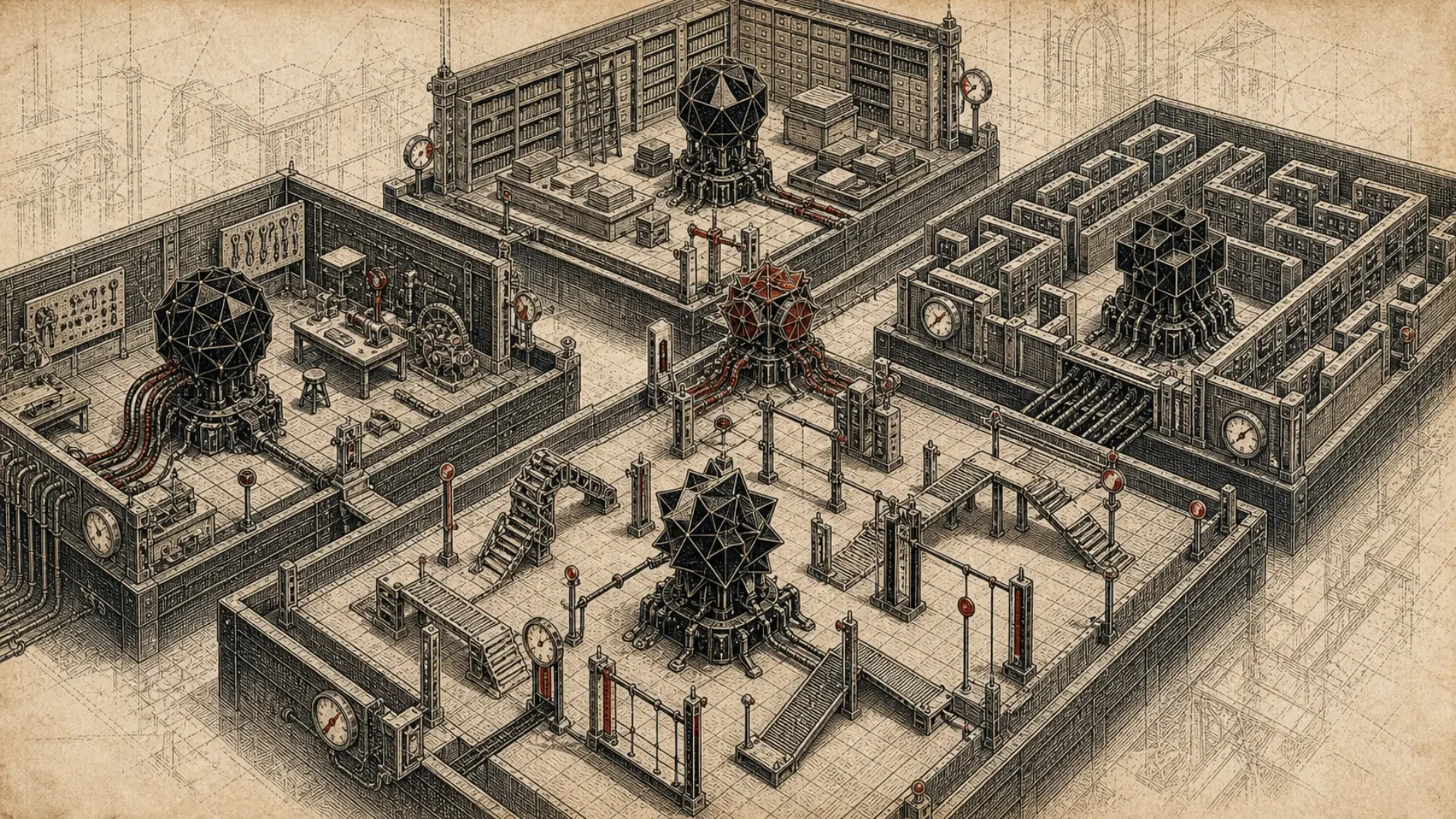
Artificial Analysis independently measures Grok 4.6 at a rounded 61, which supports the frontier-level composite claim.[5] It does not support a claim that Grok is the fastest or smartest model. The same xAI table places GPT-5.6 Sol at 73.0% on DeepSWE 1.1 and 34.6% on Terminal-Bench 3.0, ahead of Grok's 65.9% and 26.0%. Fable 5 also scores 62 on the rounded Intelligence Index and leads several coding and agent rows in xAI's own comparison.[1]
Let's be clear: Grok 4.6 is better than Grok 4.5 in the evidence xAI chose to publish. It is not proven universally better than every rival, and it is not a speed leader. Artificial Analysis measured 58.4 output tokens per second, below the 78 median for its comparison class.[5] xAI's fast variant costs twice as much, but the launch page does not provide a normalized latency or throughput multiplier. Twice the price is a fact. Twice the speed is not.
This is still commercially dangerous for competitors. In our Grok 4.5 analysis, xAI's strength was balance rather than a crown. Grok 4.6 pushes that position closer to the frontier while keeping the base $2/$6 rate. The real story isn't first place. It is credible capability at a price that encourages developers to test a second supplier.
The Product Map: Model, Bot, And X Assistant Are Different
Most Grok coverage collapses three products into one name. That creates bad expectations.
Three Grok Surfaces, Three Different Jobs
The name is shared. The product contract is not.
Grok 4.6 model
A proprietary reasoning model accessed through the xAI API, Grok Build, Cursor, and gateways. It supplies intelligence but does not create persistence by itself.
Grok Bot
A separate early-beta agent application with a persistent cloud computer, durable state, computer use, routines, and coordination between named Bots.
Grok on X
The consumer assistant inside X. It can answer by text or voice and may search public X posts and the live web. It is not Grok Bot.
Grok Build
xAI's coding agent and CLI, where Grok 4.6 launched as the default model. It is a separate harness from both Bot and the X assistant.
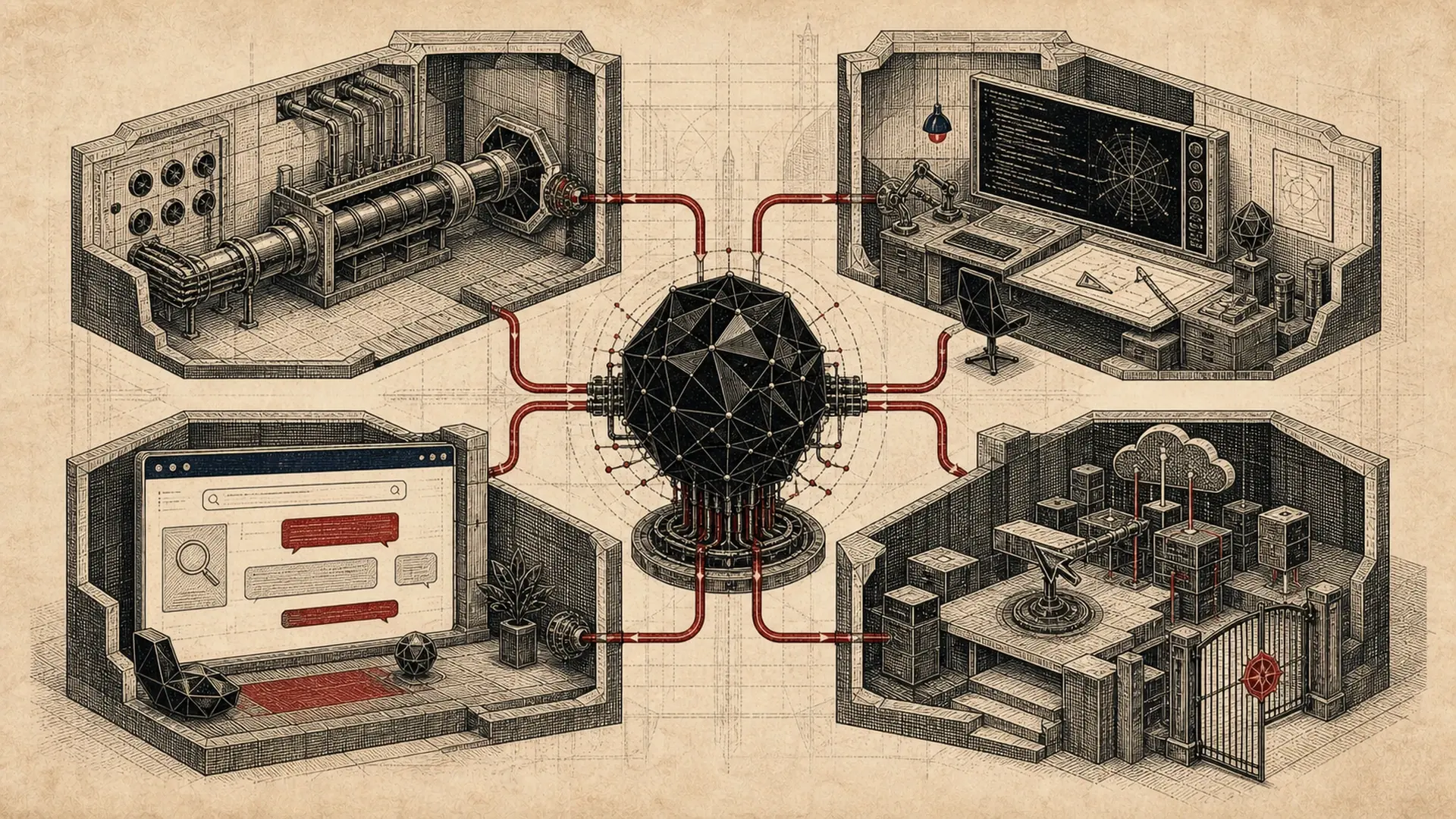
X's own help center describes Grok on X as a text-and-voice assistant that may search public X posts and the live web. It also warns that the assistant can confidently provide inaccurate information or miss context.[10] That is a consumer search and chat contract, not Grok Bot's persistent computer-use contract.
Grok 4.6's model card says consumer web, mobile, and Grok-in-X access was planned for later, while the initial release covered the API, Grok Build, Cursor, Office add-ins, and gateways.[2] Grok Bot's announcement never identifies its underlying model.[6] Any article that says Grok Bot is "powered by Grok 4.6" is filling a disclosure gap with an assumption.
What's often overlooked is that this product separation can be rational. Models change faster than agent environments. A persistent work product should be able to route tasks, preserve state, and upgrade intelligence without forcing users to rebuild every routine. But buyers need to know which model, reasoning setting, tools, and safeguards actually execute a task. A brand name is not an audit log.
The Bot: Persistence Turns Answers Into Work
Grok Bot is xAI's attempt to move beyond a chatbot session. xAI describes named Bots that share a persistent cloud computer, sign in to apps and websites, keep working when the user's laptop is closed, and return when a task is finished or needs approval.[6][8] A Bot can retain files, browser sessions, preferences, and workflow context. It can learn a repeated process from a demonstration, save it as a routine, and run it again on demand or on a schedule.[7]
xAI's launch examples include CRM updates and sales follow-ups, marketing campaigns, invoice processing, onboarding operations, bug reproduction, ticket filing, and handoffs to debugging Bots.[6] Multiple Bots can message one another, share context in threads, and coordinate in group chats. These are product claims and internal anecdotes, not independent task-success measurements.
The Persistent Agent Work Loop
The model produces leverage only when the surrounding system can preserve state, act in tools, and stop at the right moment.
Assign a bounded outcome
Give the Bot a result, the systems it may use, and a precise approval boundary.
Work inside the cloud computer
The Bot uses browser sessions, files, terminal tools, connectors, and computer use while the user steps away.
Return evidence before action
Require citations, tests, diffs, or drafts before publishing, purchasing, deleting, or changing production systems.
Save the reliable path
Turn a reviewed workflow into a reusable routine only after it succeeds on bounded, low-risk inputs.

Here's the genius: model persistence and environment persistence reinforce each other. A stronger model can stay coherent through more steps. A persistent computer avoids rebuilding the browser state, files, and operating context on every run. A reusable routine amortizes the expensive setup across repeated work.
That is how a $2 input-token price becomes a labor story. The buyer is not purchasing tokens. The buyer is trying to purchase accepted outcomes per hour of supervision.
The Catch: Shared State Creates A Shared Blast Radius
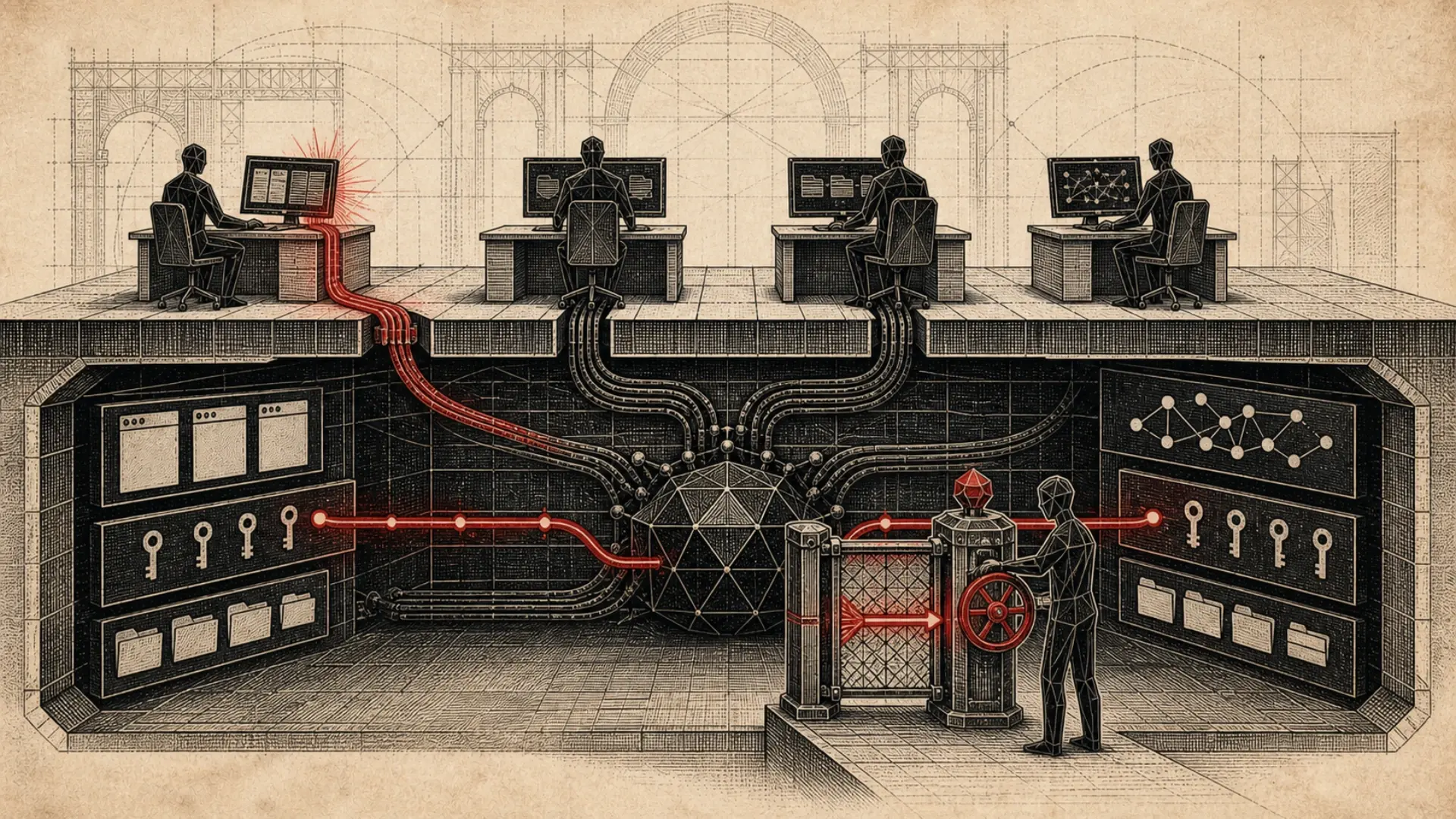
Grok Bot's most important design detail is buried beneath the teammate metaphor. All Bots on one account share the same cloud computer. Browser cookies, signed-in sessions, files, and command-line credentials are available across the user's Bot roster. Each Bot gets a separate screen, but the screens are not separate security boundaries.[7][8]
That makes coordination efficient. It also makes specialization easy to misunderstand. A finance Bot and a marketing Bot can be different conversational identities while retaining access to the same files and logins. Creating another Bot does not create another sandbox.
xAI's guidance says users should set explicit boundaries for messages, publishing, purchases, deletion, permission changes, production changes, and legal acceptance. Its Auto Review feature can evaluate actions, but xAI says model-based review should complement rather than replace least privilege and explicit approvals.[9]
A Faster Agent Can Make A Faster Mistake
Do not use separate Bots as security boundaries. Start with read-only research and drafts, use scoped accounts, require approval for external or irreversible actions, and remove sessions, connectors, and sensitive files when the work ends. Grok Bot's shared computer is both its collaboration advantage and its shared blast radius.[8][9]
The independent launch coverage confirms the broad product shape, including persistent cloud work, cross-app execution, multi-Bot coordination, and limited beta access.[12] It does not independently validate xAI's claim that Bots finish jobs end to end or become sharper with use. Those claims need production evidence: completion rates, intervention frequency, permission incidents, rollback quality, and cost per accepted task.
How To Evaluate Grok 4.6 And Grok Bot
Test the complete work loop. Measure briefing, retrieval, tool use, verification, handoff, and acceptance, not only the first answer.
Freeze the conditions. Record the model version, reasoning effort, tools, prompt and output limits, permissions, concurrency, latency, and acceptance criteria.
Price accepted work. Include long-context rates, search and tool calls, retries, reviewer time, and rework instead of comparing token prices alone.
Treat the Grok Bot account as one trust boundary because its Bots share a computer, browser sessions, files, and command-line credentials.
Verify the actual model behind each product surface. xAI has not said that Grok Bot runs Grok 4.6.
The Verdict: xAI Is Selling The Work Loop
Grok 4.6 is a real improvement over Grok 4.5 in xAI's published evidence. It reaches a frontier-level independent composite, improves the vendor's long-horizon benchmark snapshot, retains aggressive base pricing, and ships through channels where agents already do work. That is enough to make it a serious model release.
Grok Bot is the bigger strategic bet. It packages the browser, terminal, files, sessions, routines, agent handoffs, and approval gates that turn model intelligence into operational leverage. While competitors fight over who owns the smartest endpoint, xAI is trying to own the environment where an endpoint becomes a worker.
The real story isn't that Grok 4.6 won the frontier. It did not. The real story is that the frontier is moving from isolated model quality to managed agency. xAI now has a credible model and an audacious agent shell. Its next test is not another benchmark point. It is whether the work loop can earn trust without turning persistence into uncontrolled access.
Sources & References
Primary xAI, X, and Cursor materials are separated from independent measurements and reporting. Vendor benchmark claims are labeled in the article.
| # | Source | Outlet | Date | Key Takeaway |
|---|---|---|---|---|
| 1 | xAI | August 12, 2026 | Official launch, training claims, benchmark table, distribution, base pricing, and fast-variant pricing. | |
| 2 | xAI | August 12, 2026 | Primary model disclosure covering intended use, training, initial channels, evaluations, and safety limitations. | |
| 3 | xAI Docs | Accessed August 17, 2026 | Model name, modalities, reasoning efforts, tools, context guidance, and deployment surfaces. | |
| 4 | xAI Docs | Accessed August 17, 2026 | Current 500,000-token limit and the higher rates applied to all request tokens at 200,000 prompt tokens. | |
| 5 | Artificial Analysis | Accessed August 17, 2026 | Independent 61 Intelligence Index score, 58.4 output tokens per second, and $0.84 weighted cost per benchmark task. | |
| 6 | xAI | August 11, 2026 | Official early-beta announcement, availability, use cases, persistent-computer claims, and multi-Bot coordination. | |
| 7 | xAI Docs | Accessed August 17, 2026 | Defines a Bot, persistent state, reusable routines, collaboration, and the shared-computer account boundary. | |
| 8 | xAI Docs | Accessed August 17, 2026 | Documents shared browser sessions, files, command-line credentials, computer persistence, and human takeover. | |
| 9 | xAI Docs | Accessed August 17, 2026 | Approval rules, Auto Review limits, least-privilege guidance, credential handling, and shared-state warnings. | |
| 10 | X Help Center | Accessed August 17, 2026 | Explains the separate Grok assistant on X, its public-X and web-search behavior, limitations, and user data controls. | |
| 11 | Cursor Cursor Team | August 12, 2026 | Training-partner account of Grok 4.6, long-horizon behavior, benchmark claims, and Cursor availability. | |
| 12 | The Verge Jess Weatherbed | August 12, 2026 | Independent launch reporting on Grok Bot's persistent cloud computer, coordination model, use cases, and beta access. |
Last updated: August 17, 2026