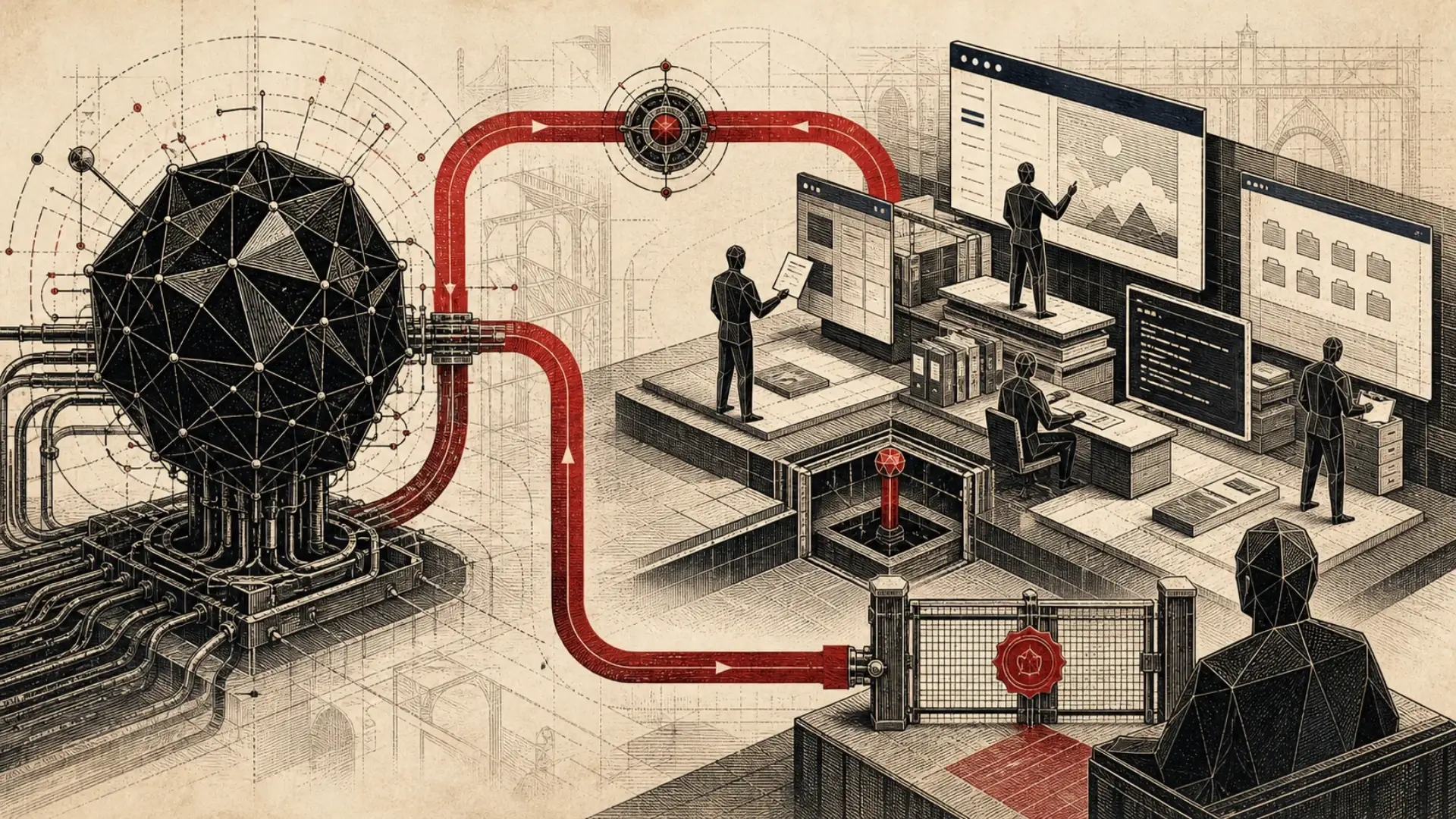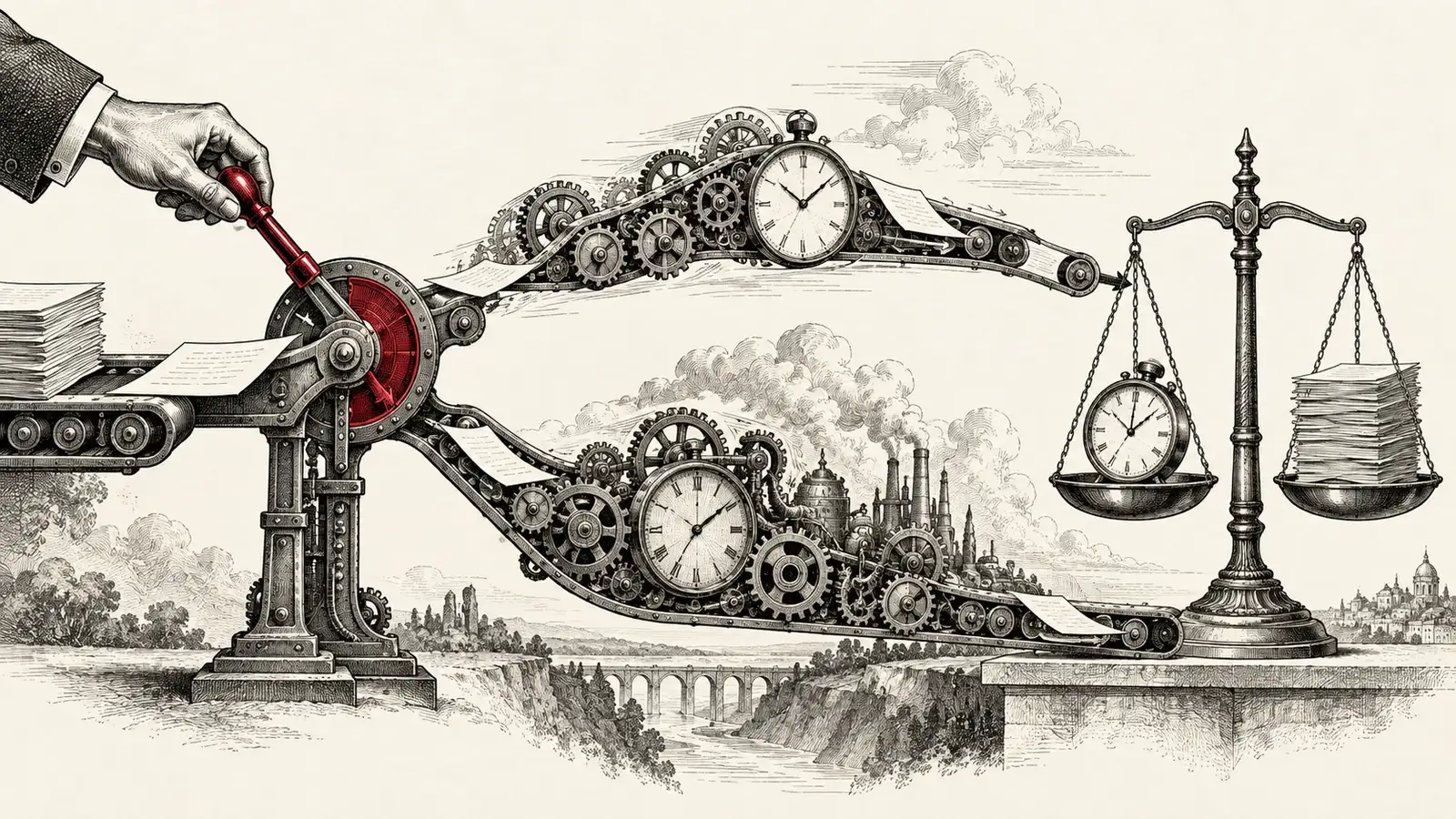
TL;DR: Grok Bot is xAI's early-beta attempt to turn AI from a chat partner into an always-on worker with a persistent cloud computer, browser, files, terminal, connected tools, reusable routines, and cross-Bot handoffs.[1][2][15] The upside is less copy and paste and more completed work. The downside is that every Bot on one account shares the same underlying computer, including browser sessions, files, and command-line credentials, so the real product challenge is not intelligence alone. It is delegated authority.[3][4]
Here is Grok Bot in plain English. A chatbot tells you how to do a job. A product agent gets a desk, stays logged in, opens the tools, performs the permitted steps, and comes back when it reaches a decision it should not make alone.
That difference sounds small until the agent can send a message, edit a file, use a customer account, or run again tomorrow without the user reopening a laptop. A wrong chatbot answer is text. A wrong agent action becomes operational history.
Why This Matters Now
The first AI product wave sold better answers. The agent wave is selling completed workflows. Grok Bot is useful as a case study because xAI has made persistence, browser control, routines, multiple named Bots, and human approvals part of one consumer-facing product. That same package exposes the central tension for every agent product: enough access to be useful, but not enough unbounded authority to make one mistake expensive.

Grok Bot, ELI5: A Chatbot Gets A Desk And A Set Of Keys
Imagine asking an assistant to prepare a weekly competitor report. A normal chatbot can outline the report. You still open the websites, collect the links, move the findings into a document, and send the finished version.
Grok Bot is designed to keep going. xAI says each Bot has a persistent cloud virtual machine with a browser, filesystem, terminal, memory, conversations, and preferences. It can use structured connectors when available, operate browser-based services when a clean integration does not exist, continue cloud work after the user's device closes, and hand work to another named Bot.[2][3][15]
The company also lets users turn a demonstrated process into a draft skill, test it, and schedule it as a routine. xAI's documentation says a browser demonstration can last up to 10 minutes, a Bot can own up to 50 routines, and the product retains the 20 most recent run records for each routine.[5] Those are product limits, not reliability scores. The docs warn that even a test run can navigate websites, modify files, and call connected tools. Setup is real execution, not a harmless simulation.
The Documented Routine Envelope
These are xAI-documented product limits as of September 2, 2026. They do not measure completion quality, safety, or business value.
Maximum visible browser interaction captured by Teach a task.
Maximum scheduled or event-driven routines owned by one Bot.
Run records retained per routine in the product interface.
All named Bots on one user account share the same persistent cloud computer.
xAI launched the product on August 11 and widened inclusion on August 26 to all SuperGrok, Cursor Pro, and Cursor Teams plans, while enterprise access remained waitlisted.[1][6] On August 29, it added an X integration for searching posts, reading timelines, mentions and trends, and managing bookmarks.[7] The Bot is distinct from the ordinary Grok assistant on X and from a fixed model contract. xAI's reviewed Bot documentation does not state that every job runs on Grok 4.6. Our earlier Grok 4.6 and Grok Bot analysis covers the model and product stack separately.
The Pros: Why Persistent Agents Could Be A Better Product Primitive
The strongest case for Grok Bot is continuity. Work is slow because context is scattered across tabs, inboxes, repositories, documents, and systems of record. A persistent agent can collect that context once, preserve it through the task, and return with a proposed result. The value is not that the model types faster. It is that the workflow stops resetting every time a person changes tools.
The second advantage is reach. An agent that can use a browser can work across the long tail of software that will never ship a perfect API. xAI says connectors are more structured and reliable when available, but computer use can operate services without one.[3] That can make agentic products practical for small businesses whose operations are held together by web tools, manual portals, and repetitive handoffs.
The third advantage is process capture. A demonstrated routine can turn undocumented operational knowledge into a visible sequence that another person can review. Used carefully, this can improve recurring research, report preparation, testing, triage, and draft-first back-office work.
Where Product Agents Can Earn Their Keep
The best early jobs have clear evidence, a narrow finish line, and a recovery path.
Research preparation
Collect permitted sources, preserve links, compare claims, and produce a reviewable brief.
Draft-first operations
Prepare an email, support response, ticket, code diff, or record update without releasing it.
Recurring monitoring
Run a bounded check on a schedule and escalate only when a documented condition changes.
Cross-tool handoffs
Move an evidence packet between tools without forcing a person to rebuild the context.
Here's the genius: the winning agent experience will not feel like commanding a robot. It will feel like opening a product and finding the boring half of the job already organized, sourced, and waiting at the one decision that deserves a human.
The Backlash: A Named Bot Is Not A Security Boundary
The backlash is rational because xAI's team metaphor can be read more strongly than the underlying architecture supports. xAI's own documentation says all Bots for one user share one persistent cloud computer. Browser cookies and signed-in sessions, files, and command-line credentials are shared. Installed connectors are account-wide. Separate Bot screens help organize work, but they are not separate security boundaries.[2][3][4][15]
That does not prove a vulnerability or a breach. It does mean that naming one Bot “research” and another “finance” does not isolate their access. Public commentary from Charlie Hills, security founder Nitish Garg, and agent builder Sreenath Menon has focused on this gap between the intuitive team metaphor and the documented account-level machine.[12][13][14] No independently verified Grok Bot cross-Bot breach, unauthorized transaction, or Auto Review failure appeared in the sources reviewed for this article. The criticism is architectural and prospective.
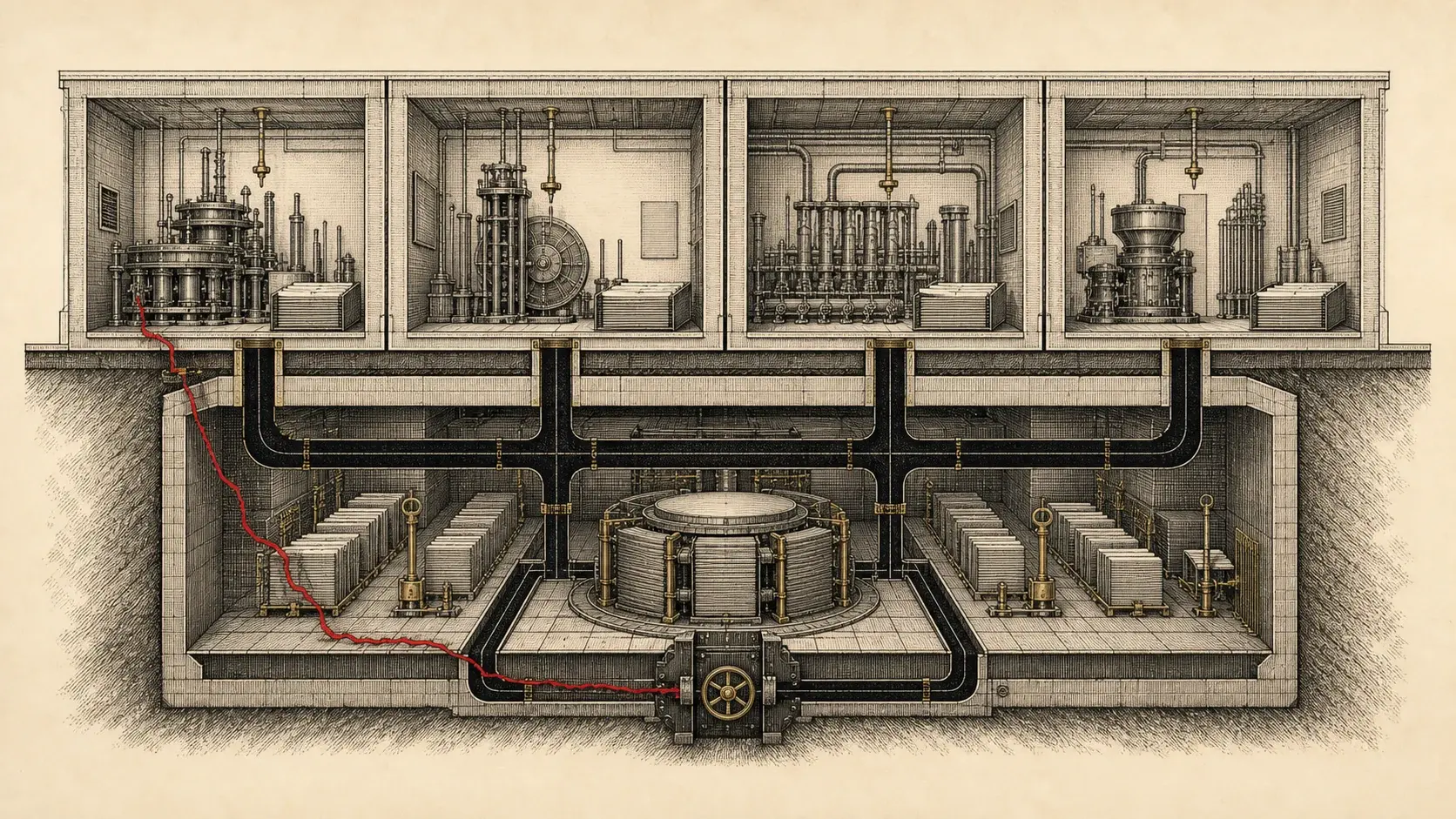
Persistence creates a second problem: cleanup. xAI says Grok Bot requires cloud data storage and does not support Legacy Privacy Mode. Deleting a Bot removes its profile, conversation, and routines, but does not automatically remove files or browser sessions from the shared computer. Users must separately sign out, revoke connectors, and remove sensitive files.[4][15] Deleting the character is not the same thing as revoking the credentials.
Approvals help, but they are not an undo button. xAI documents configurable approvals and a model-based Auto Review system, while explicitly saying Auto Review should complement, not replace, least privilege and explicit boundaries. Approval only governs the proposed next action. It does not reverse work already completed.[4]
The uncomfortable truth is that generic “approve” prompts can become theater. NIST warns that excessive human-in-the-loop prompts can produce consent fatigue, while OWASP identifies excessive functionality, permissions, and autonomy as core conditions behind damaging agent actions.[9][10] A useful confirmation must show the real target, recipient, amount, data scope, diff, and rollback plan. Otherwise the human is only blessing the agent's prose.
The General Risk: External Content Can Become An Instruction
Grok Bot is one example of a broader security problem. Product agents read emails, websites, documents, repositories, and tool output. Those inputs can contain malicious or irrelevant instructions that try to redirect the agent. NIST's CAISI reported successful agent-hijacking attacks against every target model in a large public red-teaming competition across tool-use, coding, and computer-use settings.[8] OpenAI similarly describes prompt injection as a long-term challenge for browser and computer-using agents, not a solved filter problem.[11]
There is no public Grok Bot-specific prompt-injection evaluation in the documentation reviewed for this article. That is a disclosure gap, not evidence that no protection exists. It is also why the product layer matters. Untrusted content should be treated as data, never as authority. An email can inform the agent that an invoice exists. It should not be able to grant itself payment permission.
The moment an AI can act inside a product, safety stops being a disclaimer. It becomes interface design, permission design, and evidence design.
The labor objection also deserves a better answer than hype. Agents can remove repetitive work, but they push the remaining work toward exception handling, review, accountability, and repair. The productivity gain is real only when saved execution time exceeds the new checking and remediation burden. A product that automates ten minutes and creates fifteen minutes of review has not increased productivity. It has moved the queue.
The Product Rule: Raise Authority One Reversible Step At A Time
The answer is not to ban product agents. It is to stop treating autonomy as a single toggle.
Read-only research is the sensible first rung. Draft-only work comes next. Scoped writes should follow only after the product has a named destination, narrow role, action record, and tested rollback. External messages, purchases, permission changes, production deployments, legal commitments, and deletion should stop at a final-effect human confirmation.

The real story isn't that every product needs an autonomous employee. Most do not. The opportunity is narrower and more valuable: delegate a specific, repetitive, evidence-heavy task without surrendering control of the business around it.
A Safer Product-Agent Work Loop
The product should make every increase in authority visible and testable.
Name the outcome and stop condition
Define the systems, allowed operations, data class, budget, owner, and what completion means.
Issue the smallest useful identity
Use a dedicated, expiring, least-privilege account rather than a broad human or administrator session.
Prefer evidence and reversible work
Collect sources, create a preview or diff, preserve the before state, and test the recovery path.
Confirm the final effect
Show the exact recipient, target, value, permissions, content, and rollback before a consequential action.
Record, monitor, and revoke
Keep the outcome and external object identifiers, then remove sessions, files, and connectors when the job ends.
The Verdict: Grok Bot Is A Preview Of The Authority Economy
Grok Bot's product idea is strong. Persistent context, computer use, routines, and handoffs address the parts of work that chat alone cannot finish. Its shared-state design is also a useful warning. The same continuity that makes an agent productive can make stale sessions, broad credentials, retained files, and ambiguous policies consequential.
While competitors add assistants to every screen, xAI is testing what happens when the assistant operates across screens and keeps working after the conversation ends. The strategic battle will not be won by the company that promises the most autonomy. It will be won by the company that makes the boundary between suggestion, execution, approval, cleanup, and accountability easiest to understand.
The Bottom-Line Test
Do not evaluate an agent by the most impressive workflow it completes in a demo. Evaluate the routine work it can complete repeatedly with scoped authority, inspectable evidence, predictable cost, and a failure mode the customer can understand and recover from.
What Product Teams Should Take From Grok Bot
Persistence is the feature that turns a chatbot into an operator, and the feature that makes identity, retention, and cleanup unavoidable product work.
A named agent, separate screen, or friendly role description is not an access-control boundary. The account, session, files, connectors, and credentials are.
Start with read-only or draft-first jobs. Expand authority only after the workflow has a verifier, a rollback path, a durable action record, and a named owner.
Treat public backlash as an architectural warning, not as proof of an incident. The most credible criticism is the one grounded in the vendor's own documented boundary.
Sources
Fifteen sources anchor the article at the project's editorial maximum. Primary product documentation supports Grok Bot-specific claims, authoritative security guidance covers general agent risks, and public commentary is identified separately rather than presented as incident evidence.
| # | Source | Outlet | Date | Key Takeaway |
|---|---|---|---|---|
| 1 | xAI | August 11, 2026 | Launches the early beta as always-on agents that use computers, coordinate, and return for approvals. | |
| 2 | xAI Docs | Accessed September 2, 2026 | Documents the persistent VM, memory, files, browser, terminal, handoffs, and one-computer-per-user boundary. | |
| 3 | xAI Docs | Accessed September 2, 2026 | Explains shared browser sessions, files, CLI credentials, connectors, human takeover, and site limitations. | |
| 4 | xAI Docs | Updated August 22, 2026 | Defines approval semantics, Auto Review caveats, shared security boundary, storage, privacy, and deprovisioning responsibilities. | |
| 5 | xAI Docs | Accessed September 2, 2026 | Documents Teach a task, routine limits, run history, testing, and the warning that test runs perform real work. | |
| 6 | xAI | August 26, 2026 | Expands plan inclusion and lists vendor-reported use cases while enterprise access remains waitlisted. | |
| 7 | xAI | August 29, 2026 | Adds X search, timeline, mentions, trends, and bookmark access through the connected plugin. | |
| 8 | NIST CAISI | 2026 | Reports successful agent-hijacking attacks against every target model in a large public competition. | |
| 9 | NIST | February 5, 2026 | Frames agent identity, authorization, auditing, non-repudiation, and human accountability as unresolved infrastructure work. | |
| 10 | OWASP GenAI Security Project | Accessed September 2, 2026 | Connects harmful agent actions to excessive functionality, permissions, and autonomy. | |
| 11 | OpenAI | Accessed September 2, 2026 | Explains why instructions embedded in untrusted content remain a core challenge for browser and computer-using agents. | |
| 12 | Charlie Hills, imported from X | August 31, 2026 | Public commentary argues that the team metaphor can obscure the documented shared-machine boundary. | |
| 13 | Nitish Garg, CellCog | August 21, 2026 | Security commentary focuses on shared sessions, files, logins, and least-privilege setup. | |
| 14 | Sreenath M. Menon | August 14, 2026 | Builder commentary contrasts per-Bot isolation assumptions with xAI's documented shared computer. | |
| 15 | xAI Docs | Updated August 22, 2026 | Restates the background-work, shared-computer, approval, cloud-storage, privacy, website, and deletion boundaries in a reader-facing format. |
Last updated: September 2, 2026