TL;DR: Union Alpha was revealed on September 18 as Pareto 26.9, a hosted multi-model system built by Circuit & Chisel and sold through Unbiased.[1] It coordinates existing open and frontier models, checks their work and escalates difficult tasks instead of relying on one newly trained foundation model. The paid endpoint costs $2.50 per million input tokens, $0.25 for cached input and $7.50 for output, with a 262,144-token context window and 131,072-token maximum output.[2]
The real story isn't who trained a secret new model. No one did. Union Alpha was a public experiment in packaging several models behind one interface and letting the system decide how much intelligence a task deserved.
That reveal makes the product more interesting, not less. Pareto 26.9 is a bet that orchestration can become the model: route the work, compare candidate answers, verify what can be checked, then spend more only where uncertainty remains. It is a different AI business from training one enormous checkpoint and charging for access to it.
Why This Matters Now
The Reveal: A Harness, Not a Hidden Foundation Model
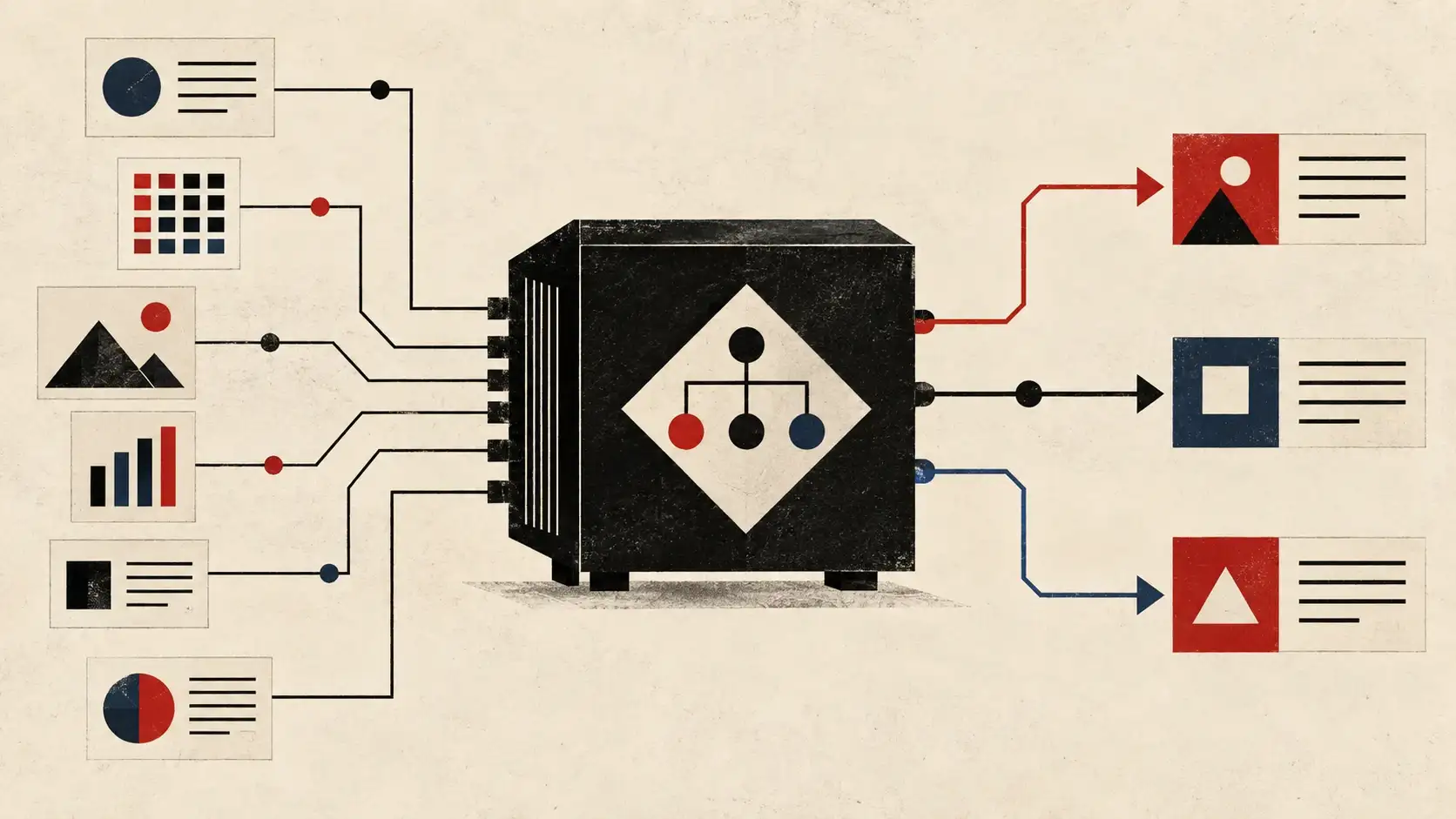
Circuit & Chisel says Pareto 26.9 sends work to existing open and frontier models, evaluates their outputs and invokes stronger models when the task requires them.[3] The exact component models are undisclosed. The service terms allow that composition to change if functionality is not materially reduced.
That architecture explains why early testers struggled to identify a single parent model from style, refusals or benchmark behavior. They were looking for one fingerprint in a system designed to combine several. A response could reflect a cheap first-pass model, a verifier, a stronger escalation model or a synthesis step. Even two identical prompts may travel through different internal paths.
The system therefore has at least four jobs. It must estimate task difficulty, select candidate models, judge the candidates and synthesize a final response. A mistake in any layer can dominate the result. A brilliant worker does not help if the router never calls it. A strong candidate can be lost if the evaluator prefers a fluent but incorrect answer. A good final response may still be too expensive if every request triggers frontier escalation.
This is the central technical question for Pareto: whether the evaluator is more reliable than the workers it coordinates. Model ensembles often improve average quality, but a learned judge can share the same blind spots, reward verbosity or fail on tasks without a cheap verification signal. Code can be tested. Arithmetic can be recomputed. Open-ended strategy cannot be validated as cleanly.
The Product: One Endpoint, Moving Internals
Pareto exposes a 262,144-token context window, up to 131,072 output tokens, image input and tool calling. OpenRouter lists the production identifier as unbiased/pareto.[2] The complete system is hosted. There are no downloadable weights for the orchestrator and its full model composition.
That abstraction is useful. An application does not need separate contracts, adapters and fallback logic for every underlying model. Pareto can change its internal mix as prices and capabilities move. A provider that routes intelligently can pass some of those gains to customers without forcing an API migration.
The same abstraction weakens reproducibility. If the worker mix changes, yesterday's successful evaluation may no longer describe today's endpoint. A stable name does not guarantee stable internals. Teams need to record the model identifier, request timestamp, provider route, sampling settings, tools, raw response and observed latency. They should rerun acceptance tasks after any material behavior change even when the public version string stays fixed.
Pareto 26.9 at Launch
Maximum advertised input context in tokens.
Advertised output-token ceiling.
Input and output cost per million tokens; cached input is $0.25.
The Benchmarks: Strong Coding, Clear Gaps Elsewhere
The official Pareto 26.9 model card reports 74 on DeepSWE, tying GPT-6 Astra in that release table. It reports 51 on Terminal-Bench 4.0 against Astra's 58, 78 on MMMU-Pro against 87, 49 on Humanity's Last Exam without tools against 54, and 88 on ArXivMath against 91.[4]
Published Release Scores
| Feature | Pareto 26.9 | GPT-6 Astra | What It Tests |
|---|---|---|---|
| DeepSWE | 74 | 74 | Repository-level software engineering |
| Terminal-Bench 4.0 | 51 | 58 | Long-horizon terminal tasks |
| MMMU-Pro | 78 | 87 | Multimodal university-level reasoning |
| HLE, no tools | 49 | 54 | Broad expert knowledge and reasoning |
| ArXivMath | 88 | 91 | Research-level mathematical reasoning |
Scores are copied from the Unbiased Pareto 26.9 model card. They are vendor-published release results, not a normalized independent leaderboard.
The pattern matters more than a composite score. Pareto matches Astra on the published DeepSWE result but trails it on the other four reported tests. That is consistent with a system whose routing and verification may be particularly effective for code, where tests and repository state provide feedback, while multimodal and open-ended knowledge tasks offer weaker automatic checks.
Independent evidence is encouraging but narrower. AI BENCHY tested the paid endpoint on September 18 and scored it 8.9 out of 10, with 18 of 22 tests fully passed, an 86.4% attempt pass rate and $1.172 total suite cost.[5] Average response time was 31.51 seconds and the maximum was 143.33 seconds. Those figures belong to one private 22-test suite. They show useful breadth and material tail latency, not universal quality.
Earlier preview runs add context. LiveBench recorded 76.1 overall, including 82.1 in coding, 95.3 in mathematics and 59.5 in instruction following.[6] ARI Bench reported a provisional 32 out of 100 hidden exact-match score after one of three seeds.[7] The missing seeds and the transition from preview to paid endpoint make that result directional.
The Economics: Cheap Tokens Can Hide Expensive Deliberation
Pareto's list price is aggressive: $2.50 per million input tokens, $0.25 per million cached input tokens and $7.50 per million output tokens. A workload with one million uncached input tokens and 200,000 output tokens costs $4.00 before gateway fees, tools or retries. If 80% of that input can be served from cache, the same token mix falls to $2.20.
The price does not reveal internal compute. Pareto may ask several models to work on one customer request, discard candidates and bill only the final token interface. That can be attractive for buyers because the provider absorbs the ensemble complexity. It also creates a strong incentive for the provider to become excellent at routing. Every unnecessary escalation consumes margin, while every underpowered route risks customer trust.
Latency is the second price. Parallel candidate generation can reduce wall-clock time, but verification and escalation add serial stages. AI BENCHY's 31.51-second average and 143.33-second maximum suggest that some tasks trigger much longer paths. An interactive coding assistant may tolerate thirty seconds for a difficult fix. A customer-support action or UI autocomplete usually will not.
The right metric is cost per accepted task, split by workload. Track input and output tokens, time to first token, total latency, retries, tool calls, human correction minutes and whether the answer passed an external check. Pareto should win where extra deliberation replaces human review or prevents an expensive error. It should lose fast, cheap tasks to a simpler model.
The Use Cases: Where Orchestration Has a Real Advantage
Software engineering is the clearest fit. Candidate models can propose patches while tests, linters and repository checks give the evaluator concrete evidence. Pareto's DeepSWE result and AI BENCHY coding passes support that use case, although production teams still need sandboxing and code review.
Research synthesis is plausible when the system can browse, preserve citations and compare claims across sources. The evaluator should score source coverage, contradiction handling and whether every material assertion maps to evidence. Without that structure, multiple models can produce a polished consensus that repeats the same underlying error.
Tool use also benefits from separation of roles. One model can plan, another can validate arguments and the application can enforce permissions. Pareto lists tool calling, but the host application remains responsible for schemas, authorization, idempotency and confirmation before consequential actions. A model ensemble does not turn an unsafe tool into a safe one.
Long-form generation is less obviously advantaged. Multiple writers and judges can improve structure, but they can also flatten voice and increase latency. For routine drafts, a single capable model with a strong template may be cheaper and more consistent. Pareto earns its premium only when selection and checking create measurable lift.
The Operational Risk: The Provider Becomes the Model Manager
Pareto's moving composition creates a procurement question. Which companies process the prompt, in which regions, under which retention terms? A gateway privacy setting may constrain routes, but it does not automatically make every underlying provider equivalent. Regulated teams need an explicit list of allowed processors or a deployment mode that guarantees the route.
Versioning is equally important. A service can improve aggregate performance while regressing a critical workflow. If the underlying mix changes without a new public version, customers need behavior monitoring to detect it. Store a small canary suite and run it daily. Alert on schema validity, refusal behavior, tool-selection accuracy, citation quality and latency. A moving system needs continuous acceptance testing.
There is also concentration risk. Pareto reduces the customer's dependence on any one model vendor but increases dependence on the orchestrator. If Unbiased changes pricing, removes a worker or suffers an outage, the customer cannot recreate the exact service from a downloadable checkpoint. Keep a simpler fallback path and make sure it can complete the minimum viable workflow.
The Strategic Take: The Moat Is the Evaluation Loop
While competitors train larger checkpoints, Circuit & Chisel is trying to own the decision about which checkpoint should work, when it should be checked and when the task deserves escalation. If that layer learns faster than model prices fall, it can capture value across several labs instead of betting on one.
The uncomfortable truth is that underlying models may become interchangeable faster than good evaluation does. A routing system accumulates task traces, verifier outcomes, failure categories and cost data. That feedback can become a proprietary map of which model works for which job. The better the map, the less the customer needs to care about worker names.
The risk is that model providers build the same orchestration into their own platforms, or customers decide that transparent single-model behavior is easier to govern. Pareto must prove that its hidden complexity buys a durable improvement after cost, latency and auditability are counted.
What the Reveal Does Not Prove
Here's the genius of the reveal: Union Alpha was never one mysterious intelligence. It was a test of whether the market would value a checked answer more than a famous model name. Pareto 26.9 now has to prove that the evaluation loop deserves the trust the mystery created.
Sources & References
Key sources and references used in this article
| # | Source | Outlet | Date | Key Takeaway |
|---|---|---|---|---|
| 1 | Union Alpha | September 18, 2026 | The stealth endpoint was identified as Circuit & Chisel's Pareto 26.9, offered through Unbiased. | |
| 2 | OpenRouter | Accessed September 19, 2026 | Current model ID, context, output ceiling, modalities, tool support and token pricing. | |
| 3 | Unbiased | Accessed September 19, 2026 | Pareto coordinates existing models, evaluates work and escalates when needed. | |
| 4 | Unbiased | September 18, 2026 | Published DeepSWE, Terminal-Bench, MMMU-Pro, HLE and ArXivMath results. | |
| 5 | AI BENCHY | September 18, 2026 | Independent 22-test result, completion rate, cost and latency. | |
| 6 | LiveBench | September 17, 2026 | Preview-era category scores recorded under Union Alpha. | |
| 7 | ARI Bench | September 17, 2026 | Provisional one-seed agentic research result. | |
| 8 | Cloudflare | Accessed September 19, 2026 | Gateway integration and remaining Union Alpha identifier in example responses. | |
| 9 | OpenRouter | Accessed September 19, 2026 | Provider handling must be reviewed separately from the model label. | |
| 10 | Union Alpha information portal | Updated September 18, 2026 | Compiled reveal timeline, pricing, specifications and benchmark links. |
Last updated: September 19, 2026