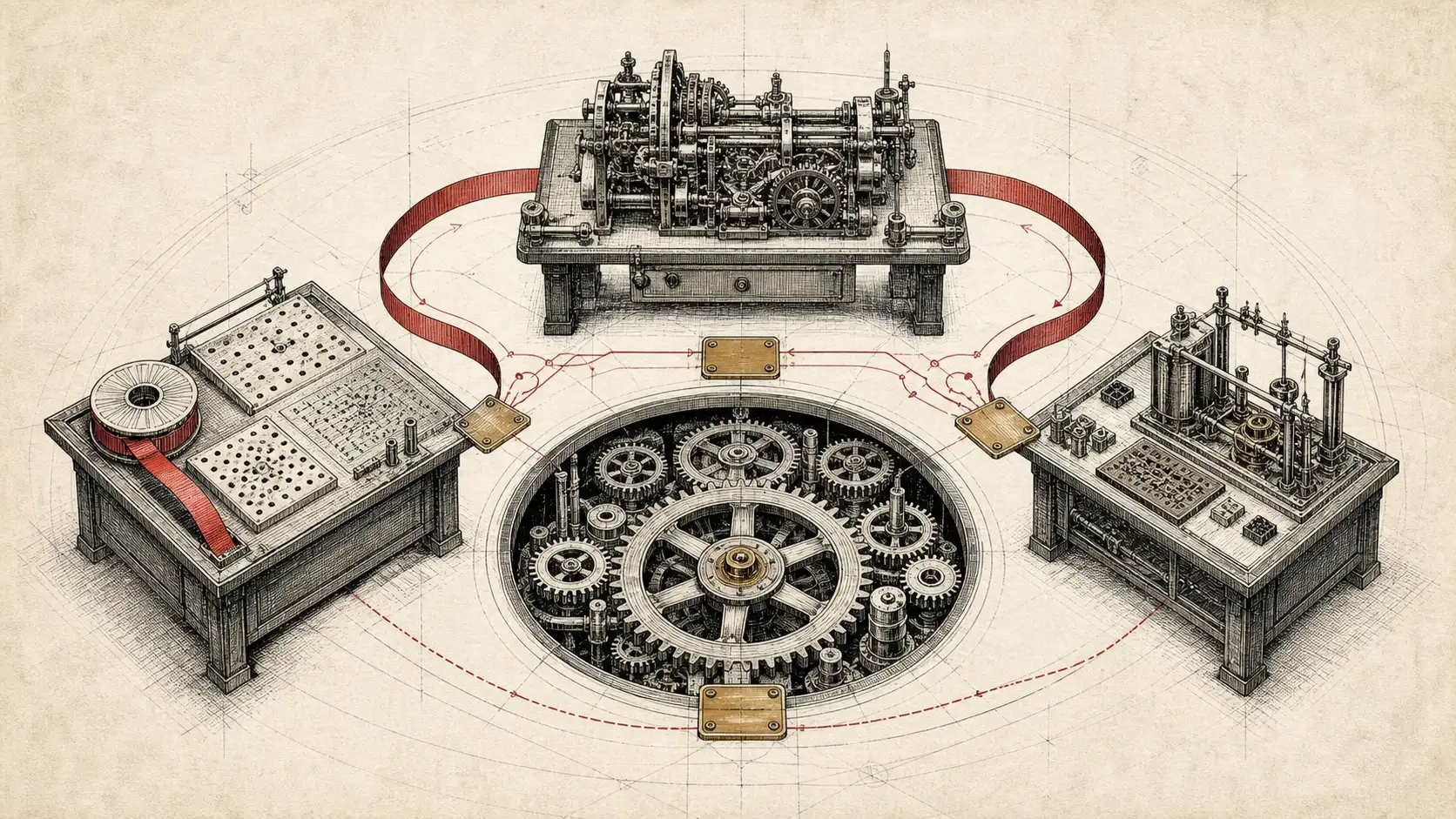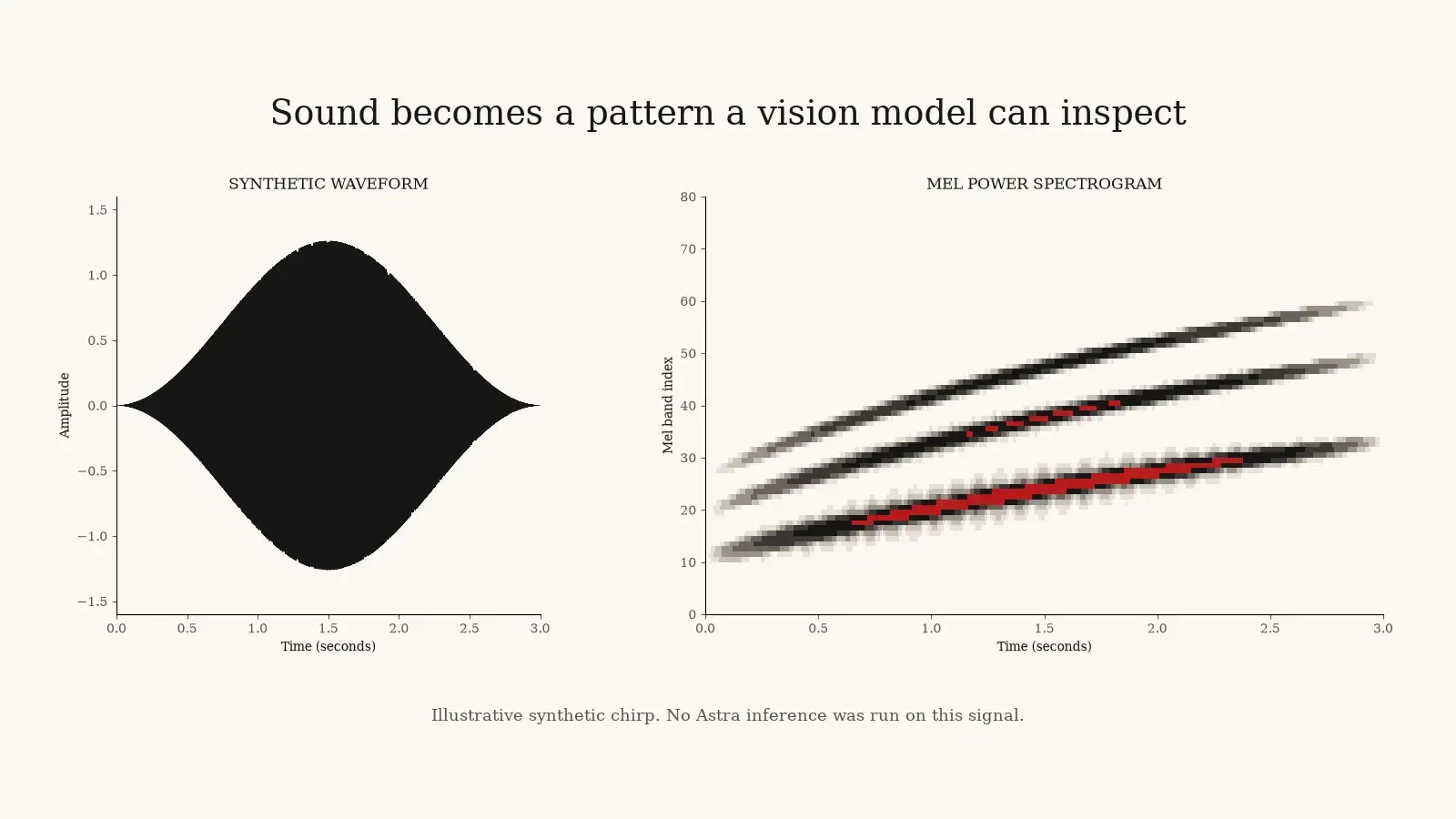
TL;DR: Alibaba's Qwen3.8-Max is a 2.4-trillion-parameter mixture-of-experts model with a 1-million-token context window, 991K maximum input, 131K maximum output, and official API pricing of $2 per million input tokens and $6 per million output tokens.[1][2] Alibaba labels its launch results 86.6 on Terminal-Bench 2.1 and 93.0 on PaperBench, but neither figure is interpretable as a model-only score without the exact harness and metric definition; the same table places Qwen 12.3 points behind Claude Fable 5 on SWE-bench Pro and 15.3 points behind on FrontierSWE.[1][6][8] The real story isn't that Qwen swept the frontier. It is that Alibaba is using low token prices and a promised open release to pull model demand into a cloud business backed by a RMB380 billion infrastructure program.[13]
Alibaba previewed Qwen3.8-Max in July with an enormous parameter count and almost none of the evidence required to interpret it. On August 3, the company filled in the product page, published a benchmark table, opened general API access, and said the flagship's weights would arrive the following week alongside a smaller Qwen3.8-27B checkpoint.[1][5]
That changes the argument. Qwen3.8-Max is no longer a teaser with a 2.4T headline. It is a priced, callable product with text, image, and video input; a 1M-token context; function calling; structured output; caching; fine-tuning; and five built-in tools on Alibaba's Responses API.[2][3]
The uncomfortable truth is that “open weight” and “accessible” are diverging. A 2.4T checkpoint can be inspectable without being practical for ordinary companies to host. Alibaba's strategic move is not merely releasing a large model. It is offering cloud distribution for the flagship, then using openness to make the ecosystem harder to leave.
Why This Matters Now
Frontier AI is becoming a three-part product: model capability, serving economics, and deployment control. Qwen3.8-Max pressures closed labs on all three at once. Its API is priced below premium Western flagships, Alibaba says the weights are coming, and the 27B sibling gives developers a realistic local deployment path. The launch matters even if the 2.4T checkpoint never leaves a datacenter.
The Product: 2.4 Trillion Parameters Are The Headline, Not The Buying Decision
Let's be clear: total parameters do not equal active compute, throughput, or production cost.
Alibaba identifies Qwen3.8-Max as a 2.4T-parameter MoE with 95B active parameters, meaning 3.9583% of the total parameter pool is used for a token.[1] That is a compute signal, not a storage shortcut. Without the checkpoint precision, expert-routing topology, hardware configuration, batch size, and serving software, buyers still cannot turn 2.4T into a reliable self-hosting budget.
Qwen3.8-Max's Official Product Envelope
Alibaba-published specifications and list prices as of August 4, 2026.
Sparse MoE with 95B active, or 3.9583% of total parameters
991K max input, or 983K with thinking enabled
Listed for both standard and thinking modes
Maximum reasoning allocation published by Alibaba
Fresh input at the official QwenCloud list price
Text output at the official QwenCloud list price

The context figures are unusually concrete. QwenCloud lists 991K maximum input in standard mode, 983K with thinking, 131K maximum output in either mode, and a 262K maximum reasoning budget. Rate limits reach 2 million tokens per minute and 15,000 requests per minute on the published product page.[2]
What's often overlooked is the multimodal scope. This is not the text-only Qwen3-Max from 2025. Qwen3.8-Max accepts text, images, and video, while returning text. Alibaba positions native vision inside the planning and verification loop rather than as a separate perception endpoint.[2] That makes the target market broader than coding. It reaches document review, design workflows, long-video analysis, financial work, and office automation.
Alibaba's published ceiling within a 1M-token context window. Thinking mode reduces maximum input to 983K, while maximum output remains 131K.
The real buying decision is not whether 2.4 trillion sounds larger than a rival. It is whether the model can complete a valuable workflow at lower accepted-result cost, with a deployment path the buyer can control.
The Deployment Reality: Sparse Compute Does Not Make 2.4T Small
The phrase “95B active parameters” can make Qwen3.8-Max sound like a conventional 95B model wearing a larger label. That is the wrong operational interpretation. Sparse routing reduces the weights used for one token, but the serving system still needs the expert pool available across memory, accelerators, and interconnects. The inactive experts do not disappear. They become a placement, routing, and communication problem.
Alibaba's earlier Qwen3 technical report illustrates what proper disclosure looks like. Qwen3-235B-A22B documented 128 experts, with 8 activated per token, and specified the model's Apache 2.0 release.[12] Qwen3.8-Max may use a different topology. Until Alibaba publishes its expert count, routing policy, precision, placement strategy, and reference serving configuration, “95B active” cannot be converted into a credible tokens-per-second or hardware forecast.
The 1M context creates a second constraint. 991K maximum input and 131K maximum output are separately published field ceilings; Alibaba does not say they can be consumed simultaneously inside one 1M-token request.[2] KV-cache memory, multimodal tokenization, batching, time to first token, and tail latency all change the production result. A model can technically accept a large repository or video and still be uneconomic if one request monopolizes memory or delays every user behind it.
What buyers need is a reference configuration with checkpoint precision, accelerator count, memory capacity, interconnect, inference engine, quantization method, batch size, concurrency, prompt and output lengths, time to first token, inter-token latency, and sustained throughput. The product page defines what Alibaba's hosted endpoint accepts. It does not define what operating the promised checkpoint requires.
Here's the genius: Alibaba does not need self-hosting to be easy. It only needs self-hosting to be possible enough that buyers perceive an exit, while QwenCloud remains the fastest path to production. The weight promise weakens the lock-in objection. The infrastructure burden keeps the hosted endpoint commercially attractive.
What The Published Specifications Prove
| Feature | Published signal | What buyers still need |
|---|---|---|
| 2.4T total, 95B active | Sparse routing limits per-token activation | Expert topology, placement, precision, and communication overhead |
| 1M-token context | The hosted endpoint accepts very large working sets | KV-cache cost, concurrency, time to first token, and tail latency |
| $2 input and $6 output | Alibaba's hosted list price is aggressive | Tool fees, retries, cache-hit rate, verification, and accepted-result cost |
| Open weights promised | Alibaba is signaling deployment portability | Files, license, inference code, quantization, and reproducible serving guidance |
The Benchmarks: Alibaba Published A Profile, Not A Crown
Alibaba's launch table gives Qwen3.8-Max legitimate evidence. It does not give the model an uncontested victory.
On coding and agent work, Alibaba's table reports 86.6 on Terminal-Bench 2.1, versus 84.6 entries for Claude Opus 4.8 and Claude Fable 5 and 88.8 for GPT-5.6 Sol. It also labels Qwen 93.0 on PaperBench and 82.8 on IFBench.[1] Those are strong vendor-reported entries. They are not clean model-only rankings.
The same table also shows the boundary. Qwen3.8-Max reaches 67.7 on SWE-bench Pro versus Fable 5 at 80.0, 73.5 on FrontierSWE versus 88.8, and 43.6 on Humanity's Last Exam versus 53.3.[1]
Entries In Alibaba's Qwen3.8 Launch Table
| Feature | Qwen3.8-Max, Alibaba-reported | Claude Fable 5, Alibaba-reported |
|---|---|---|
| Terminal-Bench 2.1 | 86.6 | 84.6 |
| PaperBench | 93.0 | 88.8 |
| IFBench | 82.8 | 63.5 |
| SWE-bench Pro | 67.7 | 80.0 |
| FrontierSWE | 73.5 | 88.8 |
| Humanity's Last Exam | 43.6 | 53.3 |

Vendor-reported values from Alibaba's Qwen3.8 launch materials. Scores should be read row by row, not averaged into a new composite. Model version, hardware, precision, prompt and output lengths, decoding and effort settings, tool access, scaffolding, run count, retry policy, and acceptance criteria can all change the result. Alibaba's table is evidence worth reproducing, not an independent leaderboard.[1][8]
Here is the strategic pattern. Qwen's strongest reported advantages cluster around terminal work, paper reproduction, instruction following, multimodal perception, document processing, and computer interaction. Its largest deficits against Fable remain on several software-engineering and hard-reasoning evaluations. The model looks designed to execute broad professional workflows, not merely win a pure coding contest.
Qwen3.8-Max did not sweep the frontier. It made the frontier cheaper, broader, and harder to keep closed.
The independent evidence is arriving, but it remains narrower than Alibaba's table. Frontend Code Arena marked Qwen3.8-Max preliminary at 1,668 ±18 from 1,563 votes, with a rank spread of 2–4 in the cited snapshot.[11] RemakeBench's nine frozen, single-attempt game-building tests found stronger consistency from Kimi K3 and documented a Qwen run that passed 49 of 49 objective checks but failed to produce a model-declared final response.[10] Neither result settles general intelligence. Both show why preference scores, objective checks, and operational completion need to be evaluated separately.
The Evidence Ladder: What A Score Can Actually Prove
The benchmark problem is not that Alibaba published its own results. Every model company does. The problem is that one number often compresses the model, harness, tools, sampling policy, retry budget, reasoning effort, and evaluator into a result that looks simpler than the experiment.
Terminal-Bench 2.1 makes that dependence explicit. The benchmark maintainers changed 28 of 89 tasks after finding external-dependency drift, resource mismatches, and instruction or test problems. Their own comparison showed the same model family scoring differently under different agent harnesses.[8] Alibaba's 86.6 is therefore best read as a vendor system result until the complete scaffold and run settings are disclosed.
SWE-bench Pro has an even sharper caveat. A July 2026 audit flagged 200 of 731 public tasks, or 27.4%, as broken through automated review and 249, or 34.1%, through human review. The authors estimated that roughly 30% of the public set was broken and withdrew their earlier recommendation to adopt it.[7] That does not erase Qwen's 67.7 or Fable's 80.0. It lowers the confidence that the 12.3-point gap measures only software-engineering ability.
PaperBench asks agents to reproduce 20 ICML 2024 Spotlight and Oral papers using 8,316 gradable tasks; the original benchmark's best tested agent averaged 21.0%.[6] Alibaba's launch table prints 93.0 without enough detail to determine whether it is a different subscore, subset, normalization, judge, or scaffold. The responsible wording is that Alibaba labels the result “PaperBench 93.0,” not that Qwen achieved 93% on the canonical replication metric.
The evidence forms a ladder. Vendor tables establish claims worth testing. Independent task suites test whether selected behavior survives outside the vendor harness. Controlled pilots measure reliability under a buyer's tools and data. Production acceptance tests determine whether the output is correct, reviewed, timely, and cheaper than the alternative. Only that final layer answers the procurement question.
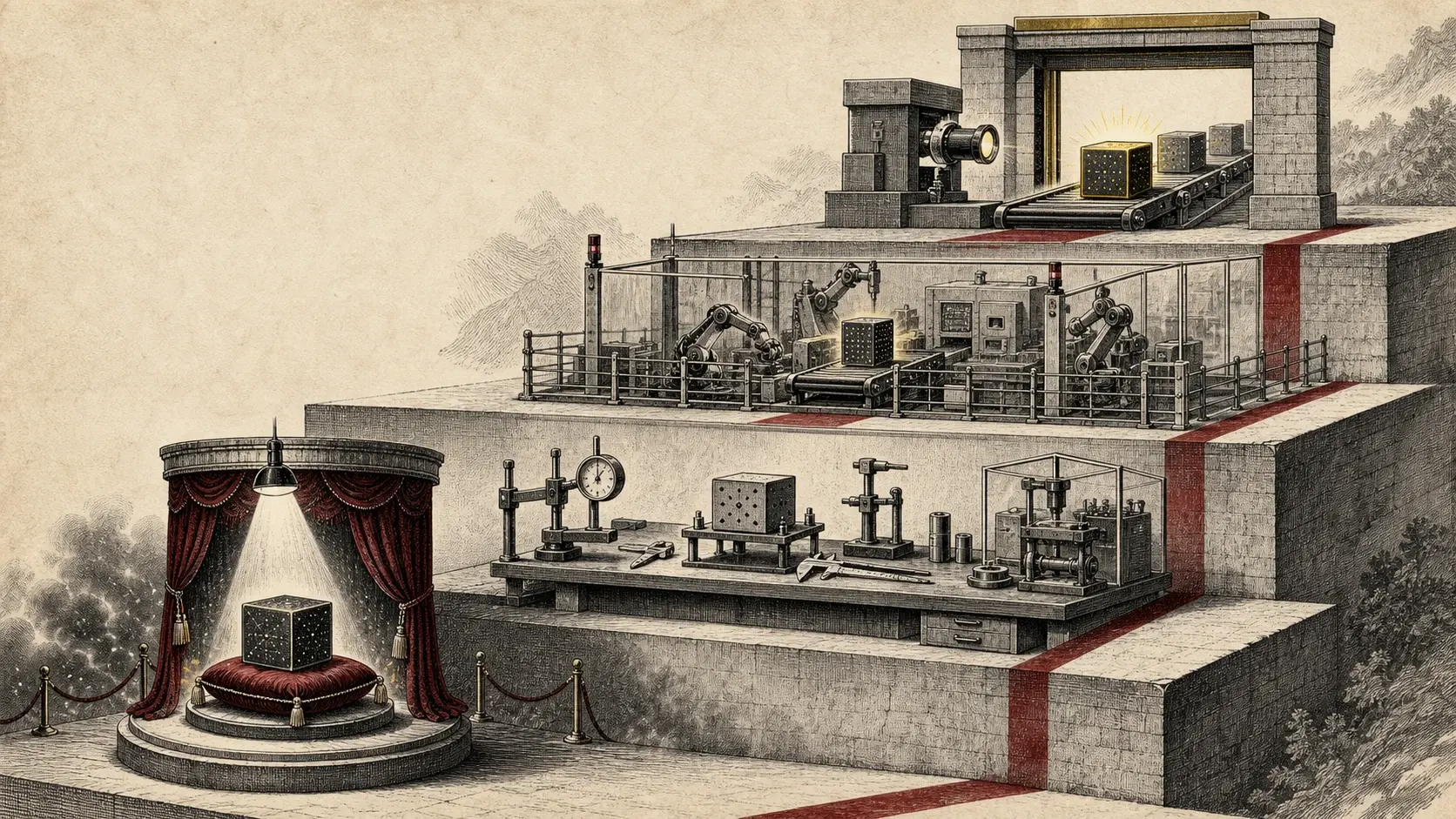
The Leap: Qwen Optimized For Long-Horizon Work, Not Chat Polish
Alibaba's most important comparison is not Qwen versus Claude. It is Qwen3.8-Max versus Qwen3.7-Max.
The company reports DeepSWE 1.1 rising from 21.6 to 56.6, FrontierSWE from 40.7 to 73.5, and JobBench from 31.3 to 53.4.[1][6] Those are gains of 35.0, 32.8, and 22.1 points respectively. If the methodology remained stable, the shift suggests a model trained to stay coherent across longer tool loops and professional tasks rather than simply produce more polished single-turn answers.
Evidence graphic
Alibaba's Reported Agent Gains Over Qwen3.7-Max
Absolute percentage-point improvements reported in Qwen's launch comparison.
DeepSWE 1.1
21.6 to 56.6
FrontierSWE
40.7 to 73.5
JobBench
31.3 to 53.4
Vendor-reported comparisons from Alibaba's launch table. Treat them as directional until the company publishes complete harness, effort, tool, and run-level details and independent evaluators reproduce the gains.
Alibaba goes further with demonstrations. The company says Qwen3.8-Max autonomously worked on a coding project for more than 10 days; secondary reporting describes a 16-day command-line application build, a 5-day paper-reproduction task, and roughly 500 chip-design iterations.[2][6] These are not standardized benchmarks. They are product demonstrations of the behavior Alibaba wants customers to buy: persistence.
Here's the genius: persistence turns token volume into recurring cloud revenue. A model that can work for days consumes more context, more tool calls, more cached prefixes, and more output than a chat assistant. Alibaba is not only selling intelligence. It is building an economic reason for developers to keep the model inside QwenCloud's execution environment.
The uncomfortable truth is that autonomous duration can hide failure as easily as it demonstrates capability. A 16-day run is impressive only if the specification stayed fixed, tests remained independent, human interventions were disclosed, compute and tool budgets were published, and the final artifact passed meaningful acceptance criteria. Duration without those details is theater with a stopwatch.
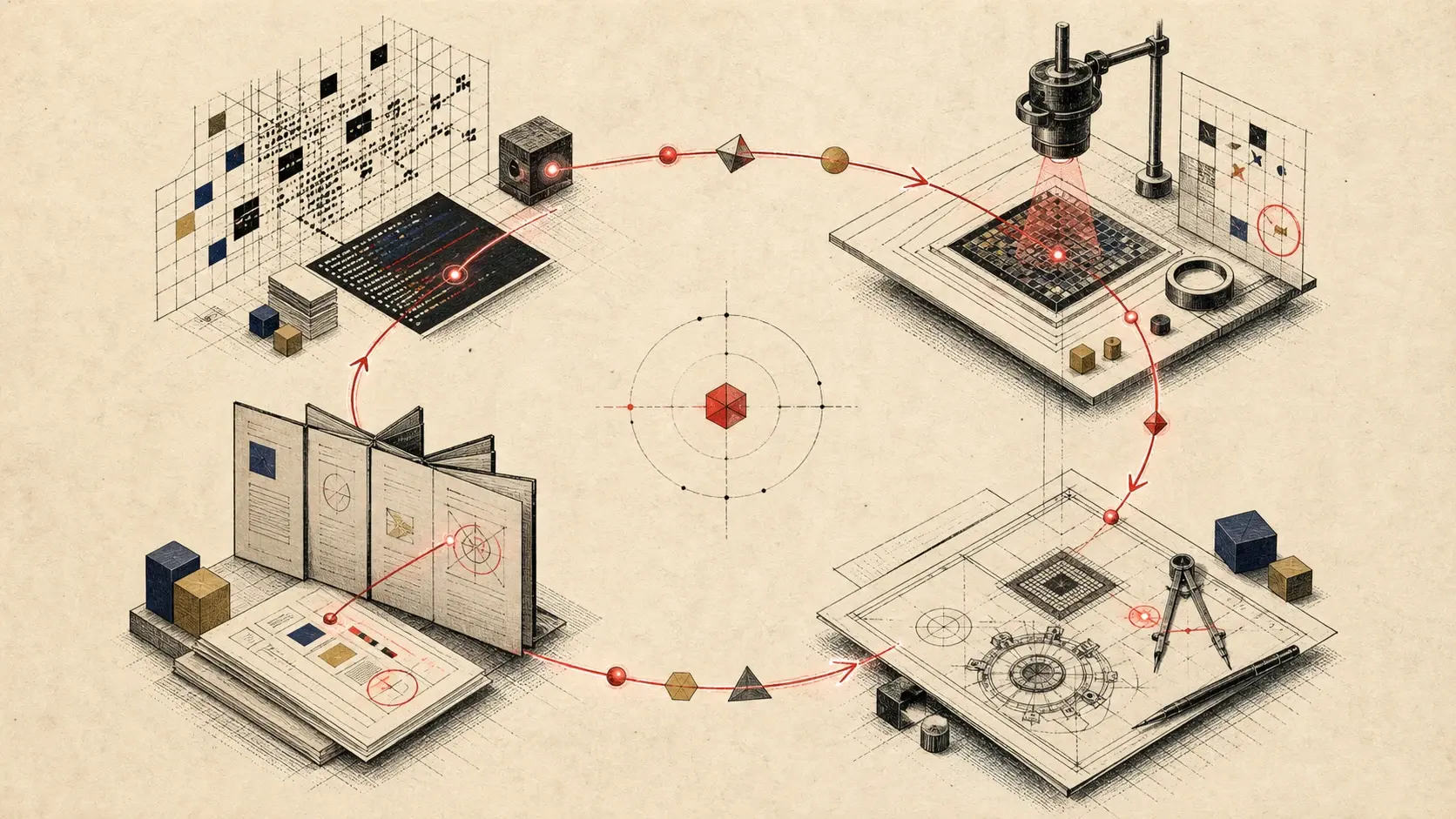
The Economics: Cheap Tokens Are Alibaba's Distribution Weapon
Qwen3.8-Max costs $2 per million fresh input tokens and $6 per million output tokens. Implicit cache reads cost $0.25, explicit cache creation costs $2.50, and explicit cache reads cost $0.17 per million tokens.[2] An implicit cache hit is therefore 87.5% cheaper than fresh input.
That cache discount is not a footnote. It is the economic architecture for long-running agents. Stable system prompts, repository snapshots, tool definitions, and accumulated project context can be reused at one-eighth the fresh-input price. Teams that keep prefixes stable get rewarded. Teams that constantly rebuild prompts or switch providers surrender the advantage.
For a simplified workload of 10 million fresh input tokens and 2 million output tokens, list-price spend is $32 before tool fees. If 90% of those input tokens qualify for implicit caching, the same token mix falls to $16.25, a 49.2% reduction. That is not a universal production forecast. It is arithmetic that shows why caching policy can matter more than the headline input price.
QwenCloud also exposes code interpreter, web search, web extraction, text-to-image search, and image-to-image search through its Responses API.[2][4] Tool calls can add separate charges and latency, so buyers need to measure cost per accepted result, not cost per million tokens.
List Price Is Not Agent Cost
Alibaba does not disclose enough deployment detail to convert 2.4T parameters into self-hosted cost, and token rates exclude the full cost of tools, retries, verification, failed branches, reasoning traces, cache misses, and human review. Benchmark scores also do not report one normalized inference setup. Do not rank Qwen's speed against another model unless hardware, precision, prompt and output lengths, decoding settings, speculative acceptance, batch or concurrency, time to first token, tail latency, and harness all match.
While competitors defend premium API margins, Alibaba was turning price into a distribution subsidy. The $2/$6 rate makes experimentation cheap enough to pull developers into Qwen's tools before the open checkpoint lands.
The Cloud Strategy: Qwen Is Alibaba's Demand Engine
Qwen3.8-Max is not an independent laboratory product searching for a business model. It sits inside Alibaba's cloud operation, where every long context, cached prefix, tool call, autonomous run, database connection, and stored artifact can become infrastructure consumption. That makes the low list price easier to understand. Alibaba is not optimizing only for margin on one token. It is optimizing for how much work enters its cloud.
The capital commitment is already enormous. In February 2025, Alibaba said it would invest at least RMB380 billion, presented as $53 billion, in cloud and AI infrastructure over three years. The company said that exceeded its combined AI and cloud spending over the previous decade.[13] Qwen3.8-Max is a demand generator for that installed capacity, not a side project detached from it.
By the March 2026 quarter, Alibaba reported Cloud Intelligence revenue of RMB41.626 billion, external cloud revenue growth of 40%, and AI-related products at 30% of external cloud revenue. Annualized AI-product revenue had passed RMB35.8 billion, while Model Studio's customer base grew 8× year over year.[14] Management forecast AI-related products would cross 50% of external cloud revenue within roughly one year. That forecast predates Qwen3.8-Max and cannot prove the model caused any reported growth. It does prove that Alibaba has a large commercial system ready to monetize adoption.
Alibaba's AI Commercialization Engine
Company-reported investment and Cloud Intelligence figures. Forecasts remain management targets, not realized results.
Minimum three-year AI and cloud commitment announced in February 2025
Year-over-year growth reported for the March 2026 quarter
Share of external cloud revenue attributed to AI-related products
Year-over-year customer-base growth reported by Alibaba
Alibaba is also trying to own more of the cost stack. The company reported more than 100,000 proprietary Zhenwu processing units deployed on its public cloud, with over 60% of T-Head compute capacity serving external customers.[14] Vendor silicon claims need independent performance evidence, but the strategy is unmistakable: models create demand, the cloud captures workloads, custom chips compress serving costs, and low API prices attract the next cohort.
Here's the genius: cheap inference can function as customer acquisition. A team arrives for Qwen, adopts the Responses API, connects search and code execution, stores project state, tunes prompts around cache behavior, and builds operational dependencies above the endpoint. The model price opens the door. Workflow gravity makes the account durable.
The real story isn't whether Alibaba earns the highest gross margin per generated token. It is whether Qwen makes Alibaba Cloud relevant to developers and enterprises that might otherwise default to Microsoft, Google, or another Chinese provider. A frontier endpoint can pull demand toward compute, storage, networking, databases, observability, security, and deployment services. The token is the smallest line item in the strategic spreadsheet.
The market ledger below uses Hyperliquid's metaAndAssetCtxs data for the xyz HIP-3 deployment.[15] These marks are useful, continuously refreshed market context. They are not official cash-equity closes, and a perpetual derivative's funding, liquidity, oracle, leverage, and trading hours can create basis against the referenced share price.
The Open-Weight Bet: The Flagship Is Promised, The Practical Model Is 27B
Alibaba says open weights for Qwen3.8-Max and Qwen3.8-27B will arrive the week after the August 3 announcement.[1][5] As of this article's August 4 cutoff, the Qwen Hugging Face organization does not yet expose those checkpoints, and Alibaba has not published the final license in the sources reviewed for this draft.[9]
The distinction matters. “Open weights next week” is a commitment, not a downloadable artifact today. A model is not operationally open until the files, license, tokenizer, configuration, inference code, precision details, and reproducible serving guidance exist.
Even after release, Qwen3.8-Max will remain a datacenter proposition. A crude lower-bound calculation illustrates the scale. Storing 2.4 trillion parameters at 16 bits requires 4.8 decimal terabytes of raw weights before overhead. At 8 bits it requires 2.4 TB; at 4 bits, 1.2 TB. Those figures exclude KV cache, activations, routing buffers, runtime overhead, redundancy, and the networking required to keep a multi-node system fed.
Qwen3.8-27B is the commercially shrewd companion. At 16 bits, 27 billion parameters require roughly 54 GB for weights; at 8 bits, 27 GB; at 4 bits, 13.5 GB, again before runtime overhead. The smaller checkpoint can plausibly reach workstations and ordinary on-premise servers. The flagship proves the ceiling. The 27B model distributes the brand.

The Ecosystem Flywheel: The 27B Model May Matter More
The flagship and the smaller checkpoint perform different strategic jobs. Qwen3.8-Max is the credibility anchor. Its scale, context window, benchmark table, and multi-day demonstrations tell developers that Qwen belongs in frontier evaluations. The promised 27B model is the distribution vehicle. It can reach hardware, budgets, and security environments that a multi-trillion-parameter checkpoint cannot.
That division creates a product ladder. Developers can evaluate or specialize the smaller model on controlled infrastructure, then escalate difficult workloads to the hosted flagship. Enterprises can route sensitive or repetitive work locally while reserving QwenCloud for peak capability. This is not guaranteed interoperability; it depends on the actual 27B release, tokenizer, behavior, license, and tooling. But it is the coherent strategy behind launching both sizes together.
Open-weight ecosystems compound through compatibility. Model hubs improve discovery. Inference engines reduce serving friction. Quantization expands the hardware base. Fine-tuning creates specialized derivatives. Agent frameworks turn a checkpoint into an option developers already know how to call. Managed hosts offer deployments to teams that want portability without operating clusters.
Here is the genius. Every third party that optimizes Qwen lowers the cost of adopting Qwen. Alibaba can benefit even when the workload runs elsewhere because the model family becomes familiar, its APIs become expected, and enterprises gain a credible escalation path back to QwenCloud.
The risk runs in both directions. Competing clouds can capture the serving revenue. Quantized derivatives can fragment behavior. Community fine-tunes can create safety and support failures that users still associate with Qwen. A restrictive license could weaken the flywheel before it starts. The files, license, reference inference stack, and quality of the 27B checkpoint will matter more than the phrase “open weights.”
How The Qwen Distribution Flywheel Works
The flagship establishes capability, while smaller weights and third-party infrastructure can expand adoption.
Frontier anchor
Qwen3.8-Max supplies the scale and capability signal.
Developer entry
Qwen3.8-27B could lower the practical deployment threshold.
Ecosystem
Tooling and hosting providers reduce adoption friction.
Cloud capture
The hardest workloads can return to managed infrastructure.
What Buyers Should Verify Next
Confirm that Alibaba ships both promised checkpoints, then read the actual license rather than treating 'open weight' as a commercial-use guarantee.
Demand checkpoint precision, expert-routing topology, quantization evidence, and serving guidance before modeling the 2.4T flagship's infrastructure cost.
Reproduce the strongest coding and professional-work claims under a matched harness with fixed tools, effort, budgets, and acceptance tests.
Measure total accepted-result cost, including cache behavior, tool fees, retries, verification, and human review.
Evaluate Qwen3.8-27B separately. Its practical deployment value may matter more than the flagship's benchmark ceiling.
The Verdict: Alibaba Is Selling An Exit From The Closed Frontier
Qwen3.8-Max is not a clean victory over Claude Fable 5. Alibaba's own numbers reject that interpretation. Qwen wins selected terminal, paper, instruction-following, multimodal, and document tasks. It trails materially on SWE-bench Pro, FrontierSWE, Humanity's Last Exam, and other rows. Early independent signals are promising without being unanimous.[1][10][11]
The model is still strategically dangerous for closed labs. At $2/$6, it makes high-end experimentation inexpensive. At 1M context, it can absorb the working set for repository and document workflows. With text, image, and video input, it can compete for professional tasks that once required stitched-together specialist models. If Alibaba delivers usable weights and a permissive license, it also gives large enterprises a credible route away from permanent API dependence.
The real story isn't that Alibaba built the largest number on a product page. It is that the company connected a frontier-scale model, a low-priced cloud endpoint, built-in agent tools, and a promised open release into one distribution machine.
What's often overlooked is that the 2.4T model does not need to be locally convenient to weaken the proprietary moat. It only needs to be downloadable enough for cloud competitors, governments, and major enterprises to operate it outside Alibaba, while the 27B sibling carries Qwen into smaller deployments.
Qwen3.8-Max is not the end of the closed-model frontier. It is a warning that the frontier's most valuable asset may no longer be the weights. It may be the infrastructure that makes those weights useful.
Sources & References
Key sources and references used in this article
| # | Source | Outlet | Date | Key Takeaway |
|---|---|---|---|---|
| 1 | Qwen Qwen Team | August 3, 2026 | Primary launch source for the official Qwen3.8-Max name, architecture positioning, benchmark table, long-horizon demonstrations, and open-weight commitment. | |
| 2 | QwenCloud Alibaba Cloud | August 4, 2026 snapshot | Official source for model ID, 2.4T MoE description, multimodal input, 1M context, input and output limits, reasoning budget, pricing, rate limits, features, and built-in tools. | |
| 3 | QwenCloud Documentation Alibaba Cloud | August 2026 | Official model catalog used to distinguish the production Qwen3.8-Max model ID and capabilities from the earlier qwen3.8-max-preview endpoint. | |
| 4 | QwenCloud Documentation Alibaba Cloud | August 2026 | Official documentation for tool availability and how Qwen's hosted agent environment combines search, code execution, extraction, and image retrieval. | |
| 5 | Qwen on X Qwen Team | August 3, 2026 | Official announcement promising Qwen3.8-Max and Qwen3.8-27B open weights the following week. | |
| 6 | OpenAI OpenAI Research | April 2, 2025 | Canonical methodology covering 20 ICML papers, 8,316 gradable tasks, and the original 21.0% best-agent average. Alibaba does not disclose how its launch-table value of 93.0 maps to this metric. | |
| 7 | OpenAI OpenAI | July 2026 | Audit of SWE-bench Pro finding 27.4% of public tasks broken through automated review, 34.1% through human review, and approximately 30% broken overall. | |
| 8 | Terminal-Bench Terminal-Bench Team | May 6, 2026 | Official methodology update documenting changes to 28 of 89 tasks and showing that scores vary materially with agent harness and task environment. | |
| 9 | Hugging Face Qwen | August 4, 2026 snapshot | Public model repository checked to determine whether the promised Qwen3.8-Max and Qwen3.8-27B weights had appeared by the article cutoff. | |
| 10 | RemakeBench RemakeBench | August 2026 | Independent frozen-prompt evidence across nine game-building tasks; it found Kimi more consistent and documented an operational stopping failure for Qwen. | |
| 11 | Arena.ai Arena.ai | August 3, 2026 snapshot | Independent preference-based frontend coding signal placing Qwen3.8-Max fourth at 1,668 in the cited launch-day snapshot. | |
| 12 | arXiv Qwen Team | May 14, 2025 | Primary architecture precedent for Qwen3-235B-A22B, including 128 experts, eight activated per token, 36 trillion pretraining tokens, and Apache 2.0 licensing. It does not establish Qwen3.8-Max's topology or license. | |
| 13 | Alibaba Group Alibaba Group | February 24, 2025 | Primary company announcement for the three-year RMB380 billion, or $53 billion, AI and cloud infrastructure commitment. | |
| 14 | Alibaba Group Alibaba Group | May 13, 2026 | Primary financial disclosure for RMB41.626 billion cloud revenue, 40% external cloud growth, AI's 30% revenue share, RMB35.8 billion annualized AI-product revenue, and eightfold Model Studio customer growth. | |
| 15 | Hyperliquid Documentation Hyperliquid | August 4, 2026 snapshot | Primary documentation for the metaAndAssetCtxs request used to capture xyz market marks. HIP-3 xyz instruments are perpetual derivatives, not cash equities. |
Last updated: August 4, 2026