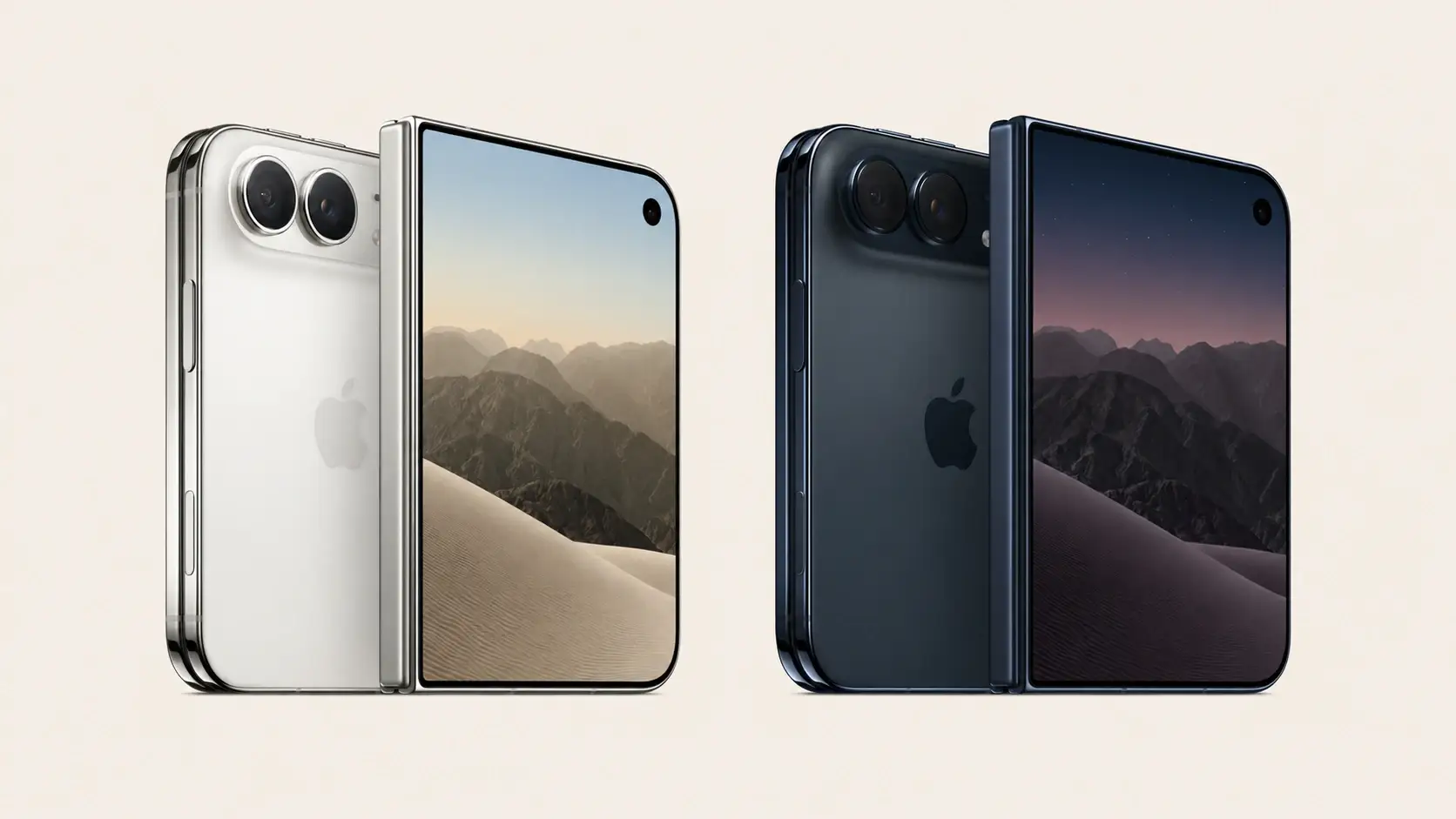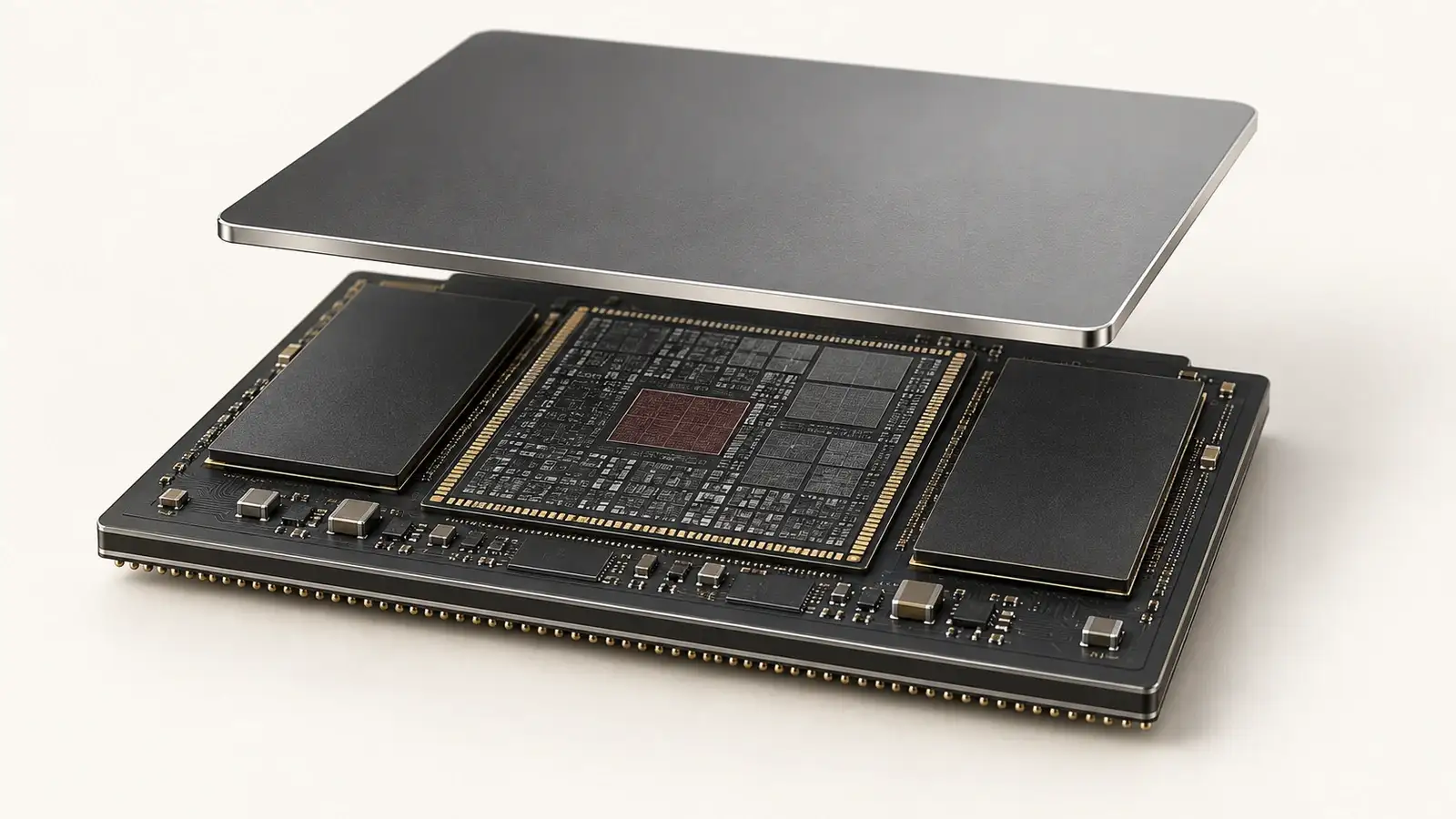
TL;DR: Apple says A20 Pro adds a 7-core GPU, a 32-core Dual Neural Engine and 50% more memory bandwidth than A19 Pro.[1] Its redesigned package also improves the route from silicon to the phone’s vapor chamber.[5] Compared with A17 Pro through A19 Pro, Tensor G6, Snapdragon 8 Elite Gen 5, Dimensity 9500 and Exynos 2600, the meaningful story is how each platform combines compute, memory, cooling and software to run useful local AI.
What this means for a phone purchase: Start with the local AI feature you need, then check whether the phone and its software support it. The chip specifications below explain potential constraints, but they do not establish an A20 Pro versus Android winner. For sustained workloads, look for tests using the same model, precision, context length and thermal conditions.
The real story isn't an A20 Pro victory lap. It is Apple moving closer to the constraint that shapes local generative AI after a model fits: memory traffic, sustained power, and the runtime sitting between a model file and the silicon. That is a sharper strategy than chasing a single TOPS number, but it leaves Apple with the same execution problem as everyone else. Hardware capability does not make a useful assistant, and it does not settle the local-versus-cloud boundary.
Why This Matters Now
Apple has disclosed a 2-performance-core plus 4-efficiency-core CPU, 7-core GPU, Dual 16-core Neural Engine, and 50% more unified-memory bandwidth for A20 Pro.[6] The significance is headroom for a shipped phone-and-runtime combination, not a claim that one published percentage proves a universal AI winner.
Apple Market Snapshot: Hyperliquid
US$316.93 mark price for xyz:AAPL, recorded September 9, 2026 at 11:09:07 p.m. EDT (September 10, 03:09:07 UTC). Hyperliquid’s public API returned an oracle reference of US$317.00 at the same capture. This is a fixed snapshot from the preparation of this article, not a live quote.[14]
XYZ’s Apple-linked market is a USDC-collateralized perpetual derivative with a USD reference price. It does not represent ownership of Apple shares or a Nasdaq last-sale quote. Instrument methodology. The snapshot provides market context; it does not isolate the effect of the iPhone launch.
Apple’s Four-Chip Arc: The New Bottleneck Is Memory Movement
A17 Pro made the iPhone a more credible high-end graphics device. Apple called it the industry’s first 3-nanometer chip, added a 6-core GPU and hardware-accelerated ray tracing, and said its Neural Engine was up to twice as fast as its predecessor.[2] A18 Pro then made the memory system explicit: Apple disclosed a 6-core CPU with two performance and four efficiency cores, a 6-core GPU, a 16-core Neural Engine, and 17% more total system-memory bandwidth.[3]
A19 Pro changed the design language again. Apple highlighted Neural Accelerators in each GPU core, a 16-core Neural Engine, larger cache, more memory than A18 Pro, and a vapor chamber in iPhone 17 Pro. Its up-to-40% sustained-performance claim belongs to that cooled phone, not to a naked chip on a comparison chart.[4]
Now A20 Pro retains the six-core CPU, adds a seventh GPU core, and doubles the Neural Engine core count to 32. Apple’s Duo technical specifications identify the CPU as two performance “super cores” plus four efficiency cores. Apple says the new chip has 50% more unified-memory bandwidth than A19 Pro, up to 20% faster CPU performance, up to 40% faster GPU performance and twice the Neural Engine compute. It does not publish RAM capacity, absolute GB/s bandwidth, clocks, watts, TOPS, or an end-to-end model benchmark harness.[1][5][6]
Four Generations of Apple Pro Silicon
| Feature | CPU / GPU / Neural Engine cores | Memory and system changes |
|---|---|---|
| A17 Pro | 6 / 6 / 16 (Apple specifications) | Apple’s first 3 nm chip; hardware ray tracing |
| A18 Pro | 6 (2P+4E) / 6 / 16 | Apple reports 17% more system-memory bandwidth than A17 Pro |
| A19 Pro | 6 / 6 / 16 | GPU Neural Accelerators; Apple reports more cache and memory than A18 Pro; iPhone 17 Pro adds a vapor chamber |
| A20 Pro | 6 (2P+4E) / 7 / 32 | Apple reports 50% more memory bandwidth than A19 Pro; adjacent memory and a direct thermal path |
Sources: Apple’s A17 Pro, A18 Pro, A19 Pro and A20 Pro launch disclosures and device specifications. [13] These are architecture disclosures and Apple’s stated generation comparisons.[2][3][4][1][5][6]
Here’s the genius: bandwidth often matters more than peak arithmetic during autoregressive generation. After the model weights are resident, each new token still needs to revisit a large share of them; full-attention layers also retain a key-value cache that grows with conversation length. The simplified model-weight floor is parameters multiplied by bits per weight divided by eight. An 8-billion-parameter model at 4-bit precision starts at 4 GB for weights alone, before the operating system, runtime workspace, quantization metadata, app buffers and context cache. More bandwidth does not erase those costs. It raises the potential ceiling only when the workload, memory configuration and runtime can use it.
The Current Android Field: Different Priorities, Real Capabilities
Google’s Tensor G6 is shipping in Pixel 11. Google announced Pixel 11, Pixel 11 Pro and Pixel 11 Pro XL on August 12, with retail availability beginning August 20, and says Tensor G6 runs the latest Gemini Nano model.[7] Google is selling a system feature story: faster Night Sight combines Tensor G6’s ISP, imaging models and a redesigned sensor. That illustrates why a camera result depends on the complete imaging pipeline.
Qualcomm’s Snapdragon 8 Elite Gen 5 remains the appropriate reference generation in this article. Qualcomm announced it on September 24, 2025, with a third-generation Oryon CPU, Adreno GPU and Hexagon NPU.[8] Qualcomm reports +20% CPU performance, +23% GPU performance and +37% NPU performance against Snapdragon 8 Elite. Those are its own generation-to-generation claims, not an A20 Pro comparison.[8]
The same restraint applies to MediaTek. Dimensity 9500 is the announced platform used for this comparison. MediaTek specifies TSMC N3P, a 1+3+4 Arm C1 CPU design, LPDDR5X-10667, four-lane UFS 4.1, Mali-G1 Ultra MC12 graphics and an NPU 990.[9] Its launch material claims 100% faster 3B-parameter LLM output and 128K-token long-text processing, but does not publish enough model, precision, context, concurrency, thermal and harness detail to rank that output against Apple, Google or Qualcomm.[10]
Samsung’s Exynos 2600 provides the thermal counterpoint. Samsung calls it the industry’s first 2 nm GAA mobile processor and describes a 10-core C1-Ultra/C1-Pro CPU, Xclipse 960 GPU, NPU support for ExecuTorch and a Heat Path Block. Samsung reports up to 39% CPU improvement and 113% higher generative-AI performance versus Exynos 2500 in its internal testing.[11] That is a real engineering direction: make heat removal part of the chip package. It is still not a measure of what a particular local model does in a particular Galaxy chassis.
The Chipmakers Are Optimising Different Parts of the Same Product
| Feature | Disclosed emphasis | Editorial reading | Evidence boundary |
|---|---|---|---|
| A20 Pro | Bandwidth, 32 Neural Engine cores, package-to-vapor-chamber path | Apple is prioritising local-workload headroom and sustained operation | No absolute bandwidth or common AI harness |
| Tensor G6 | Gemini Nano, ISP and Pixel feature integration | Google sells an AI software-and-camera system | No public core layout or comparable throughput result |
| Snapdragon 8 Elite Gen 5 | Oryon, Adreno, Hexagon, broad OEM platform | Qualcomm gives Android makers a flexible performance stack | OEM RAM, cooling and software routing vary |
| Dimensity 9500 | NPU 990, LPDDR5X-10667, four-lane UFS 4.1 | Memory bandwidth serves inference; storage affects model loading | MediaTek’s model-output claims are vendor tests |
| Exynos 2600 | 2 nm GAA, Xclipse 960, Heat Path Block | Samsung targets compute and the package’s heat path together | Samsung’s performance baseline is Exynos 2500 |
The Runtime Decides the Accelerator: Silicon Is Only Half the Contract
The uncomfortable truth is that the chip has no opinion about where a model runs. A framework, compiler and app decide whether an operator uses CPU, GPU or dedicated accelerator; the operating system decides scheduling and memory pressure; the handset decides cooling; the model format decides which precisions and kernels are available. Apple’s Neural Engine, Qualcomm’s Hexagon, MediaTek’s NPU and Google’s TPU are meaningful only through that contract.
This is why one meaningful comparison is a deployment description, not a percentage. Google’s Tensor G6 is paired with Gemini Nano and Pixel’s camera stack. Apple says A20 Pro’s Neural Engine accelerates on-device models and computational photography, while Apple Intelligence can also route larger requests to Private Cloud Compute.[1][12] The product outcome depends on what stays local, what gets sent away, and whether the user can tell the difference.
That makes our iPhone Duo and on-device AI analysis the commercial companion to this hardware argument. The technical companion, how phone chips run on-device AI, explains why quantisation, the KV cache and memory traffic change the answer before any NPU rating enters the conversation.
Thermal Design: Speed Has a Time Limit
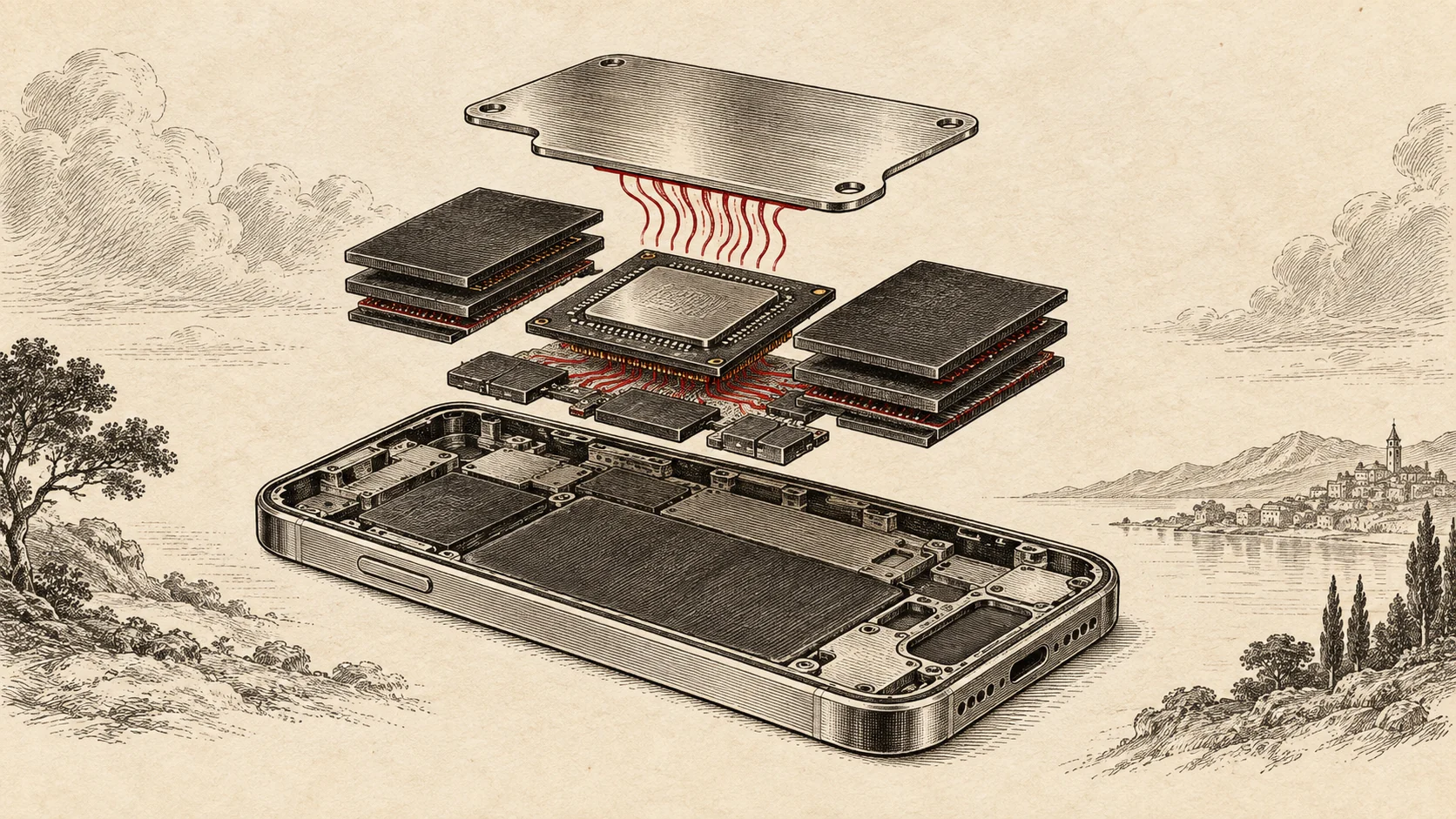
Apple’s most consequential A20 Pro disclosure is physical. Its iPhone 18 Pro release says the package places silicon beside memory, removes memory from the chip thermal path and lets the chip attach directly to a next-generation vapor chamber. Apple says the chamber has three times the surface area of iPhone 17 Pro’s and enables up to 40% better sustained performance in that system.[5] Duo uses a custom vapor chamber and Apple claims up to 35% better sustained performance than iPhone 17 Pro.[1]
Those claims deserve more attention than an uncontextualised “2 nm” label. Node names are not comparable density measurements across fabs. More importantly, a chip can peak brilliantly and still slow down after a prolonged camera task, game, transcription job or generative session. Samsung’s Heat Path Block makes the same strategic admission from the Android side: removing heat is part of preserving useful compute, not an accessory to it.[11]
For readers, this changes the practical question. Ask whether an app works after ten minutes of use, whether it reports its local download size, whether it holds a sensible context limit, and whether it degrades gracefully when the phone is warm. A first-token demo measured in a cool room is a product trailer. Sustained work is the product.
Apple’s Business Priority: Own the Experience, Let the Ecosystem Supply the Models
Android has already solved parts of this problem in a way Apple should respect. Qualcomm distributes a broad platform to many OEMs. MediaTek publishes memory and storage plumbing alongside its accelerator narrative. Google binds a custom chip to Pixel software. Samsung puts package-level heat management in a headline SoC. Apple is choosing a different advantage: a tightly integrated chip, operating system, device line and hybrid cloud service.
That strategy has a clear business logic. A20 Pro does not need to win every synthetic test if it makes Apple Intelligence feel responsive across a large installed base and gives developers dependable primitives for small, local workflows. Apple can protect the premium iPhone tier while turning on-device processing into a privacy, latency and cost-control story. The risk is that this remains a supply-side achievement. Users buy capabilities, not bandwidth ratios.
Do Not Turn a Chip Comparison Into a Synthetic Verdict
Apple, Qualcomm, MediaTek, Samsung and Google publish different baselines, models, device configurations and test conditions. A useful test fixes the model, precision, prompt and output lengths, decoding settings, batch and concurrency, and benchmark harness. It records each phone’s RAM, cooling and thermal state, reports time-to-first-token and tail latency, and discloses speculative-decoding acceptance rates if used. Until those conditions are available, the vendor figures are separate deployment signals.
What’s often overlooked is how much the chipmakers’ priorities now converge. Extra compute only becomes useful when memory can feed it, cooling can sustain it, and software can put the intended model on the intended hardware. Apple’s package changes, Qualcomm’s developer platform, MediaTek’s memory subsystem, Google’s Pixel integration and Samsung’s thermal design approach that same problem from different directions. The architecture race is becoming a race to deliver the whole feature reliably.
Consider a local transcription-and-summary app used after a long meeting. The meaningful comparison starts when the recording is ready: how long the model takes to load, how soon useful text appears, whether corrections stay responsive, and what happens as the phone warms. A20 Pro’s bandwidth and cooling changes address parts of that experience. The runtime, model quality and app design decide how much of the hardware improvement reaches the user. That is the test that could turn Apple’s published gains into a reason to upgrade.
The conclusion from the disclosed specifications is therefore specific: A20 Pro gives Apple a stronger platform for sustained local AI, while the available evidence leaves the cross-platform performance contest open. For developers, the opportunity is to use that headroom to finish a valuable task with less waiting and fewer server requests. For Apple, the obligation is to make that improvement visible in daily use. The chip can expand what is possible; the product has to make people want it again tomorrow.
Sources & References
Primary manufacturer materials. Comparative percentages remain attributed to each vendor’s stated baseline and conditions.
| # | Source | Outlet | Date | Key Takeaway |
|---|---|---|---|---|
| 1 | Apple Newsroom | Sep. 9, 2026 | A20 Pro claims, Duo thermal system and Apple Intelligence availability. | |
| 2 | Apple Newsroom | Sep. 12, 2023 | A17 Pro process, GPU, ray tracing and Neural Engine claims. | |
| 3 | Apple Newsroom | Sep. 9, 2024 | A18 Pro CPU configuration, bandwidth and GPU claims. | |
| 4 | Apple Newsroom | Sep. 9, 2025 | A19 Pro GPU, Neural Engine and vapor-chamber context. | |
| 5 | Apple Newsroom | Sep. 9, 2026 | A20 Pro package design and sustained-performance claim. | |
| 6 | Apple | Sep. 2026 | A20 Pro two-performance-plus-four-efficiency CPU disclosure. | |
| 7 | Google | Aug. 12, 2026 | Tensor G6 launch, latest Gemini Nano and Pixel 11 availability. | |
| 8 | Qualcomm | Sep. 24, 2025 | Reference-generation architecture and vendor CPU/GPU/NPU claims. | |
| 9 | MediaTek | Accessed Sep. 10, 2026 | N3P, CPU layout, memory, storage, GPU and NPU specifications. | |
| 10 | MediaTek | Sep. 22, 2025 | Model-specific LLM and efficiency claims with MediaTek’s baseline. | |
| 11 | Samsung Semiconductor | Accessed Sep. 10, 2026 | 2 nm GAA, Heat Path Block and internal generative-AI claims. | |
| 12 | Apple Newsroom | Jun. 8, 2026 | Apple’s on-device and Private Cloud Compute architecture. | |
| 13 | Apple Support | Accessed Sep. 10, 2026 | A17 Pro six-core CPU, six-core GPU and 16-core Neural Engine. | |
| 14 | Hyperliquid public API | Sep. 10, 2026, 03:09:07 UTC | Recorded mark US$316.93 and oracle US$317.00 for XYZ’s Apple-linked perpetual. |
Last updated: September 10, 2026