TL;DR: iPhone Duo starts at $1,999 in the US, $800 above iPhone 18 Pro, while AirPods 5 with Wireless Charging Case costs $149.[3][8][5] Apple says A20 Pro adds 50% more memory bandwidth than A19 Pro, giving developers a stronger platform for local AI.[1] Desert Ant’s transcription models and Liquid AI’s small language models show the app opportunity: frequent, focused tasks that can run on a phone, with larger requests handled by a cloud service.
Apple has finally made its first foldable iPhone. The consequential decision is what sits at its center: A20 Pro, a larger canvas, new AirPods, and an assistant that moves between phone, earbuds and cloud.
Apple Intelligence uses both on-device processing and Private Cloud Compute. In the US, Siri AI begins its English-language beta rollout on September 14, with usage limits and additional languages to follow.[6][7] The defensible opportunity is a focused local workflow, not a claim that every task is offline.
Why This Matters Now
Apple’s hardware wager: iPhone Duo turns a 7.6-inch display, vapor-cooled A20 Pro and a $1,999 starting price into a premium surface for multi-step apps.
The developer opening: a downloadable model can replace a per-request inference charge for a bounded task, such as transcription, extraction or routing, while leaving difficult work to a remote service.
The constraint: Siri AI is a staged product rollout, and AirPods 5 is a paired-phone interface, not an independent AI computer.
Apple Market Snapshot: Hyperliquid
US$316.93 mark price for xyz:AAPL, recorded September 9, 2026 at 11:09:07 p.m. EDT (September 10, 03:09:07 UTC). Hyperliquid’s public API returned an oracle reference of US$317.00 at the same capture. This is a fixed snapshot from the preparation of this article, not a live quote.[2]
XYZ’s Apple-linked market is a USDC-collateralized perpetual derivative with a USD reference price. It does not represent ownership of Apple shares or a Nasdaq last-sale quote. Instrument methodology. The snapshot provides market context; it does not isolate the effect of the iPhone launch.
The Device Is the Distribution Channel: iPhone Duo Sells a New Working Surface
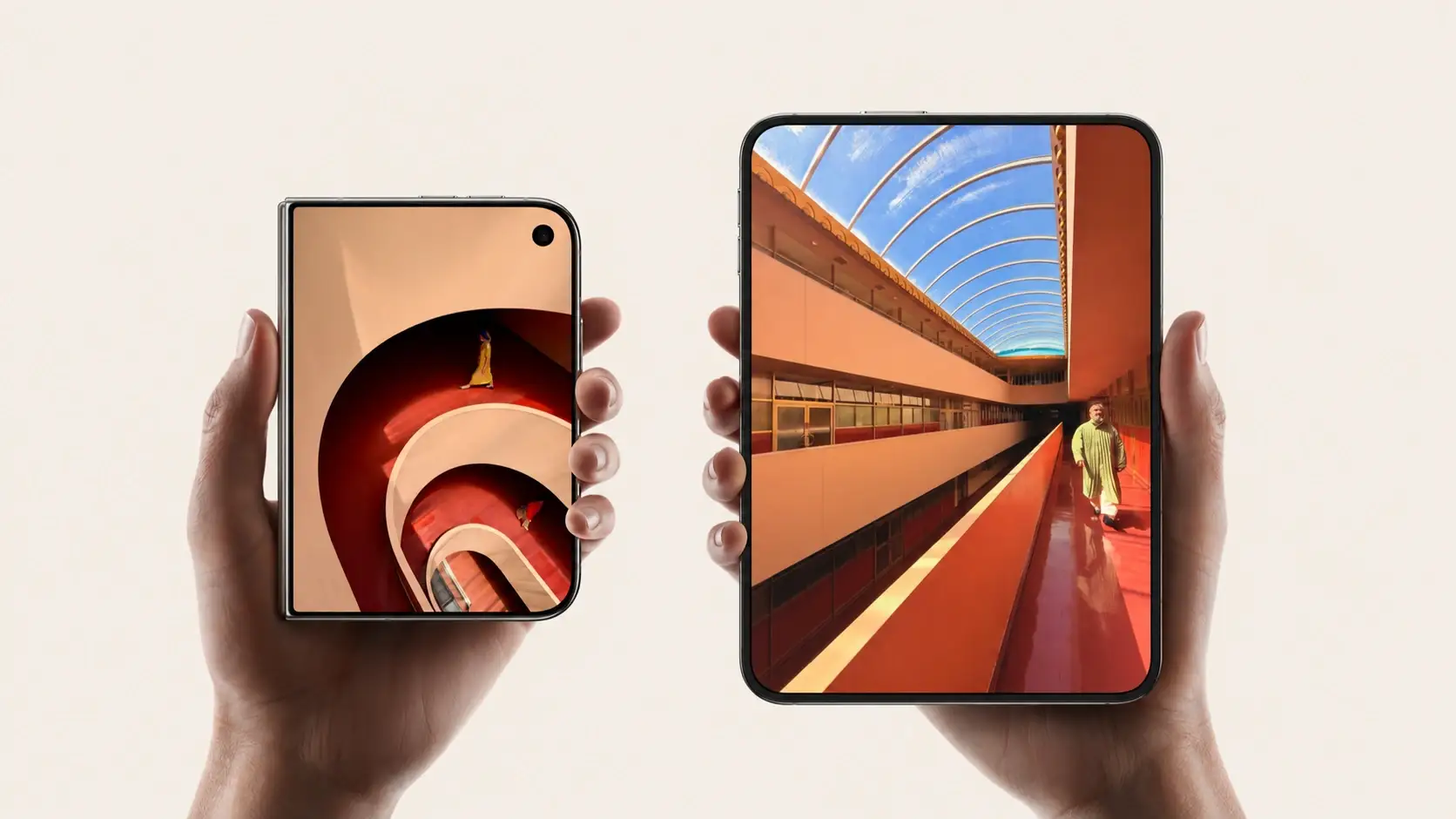
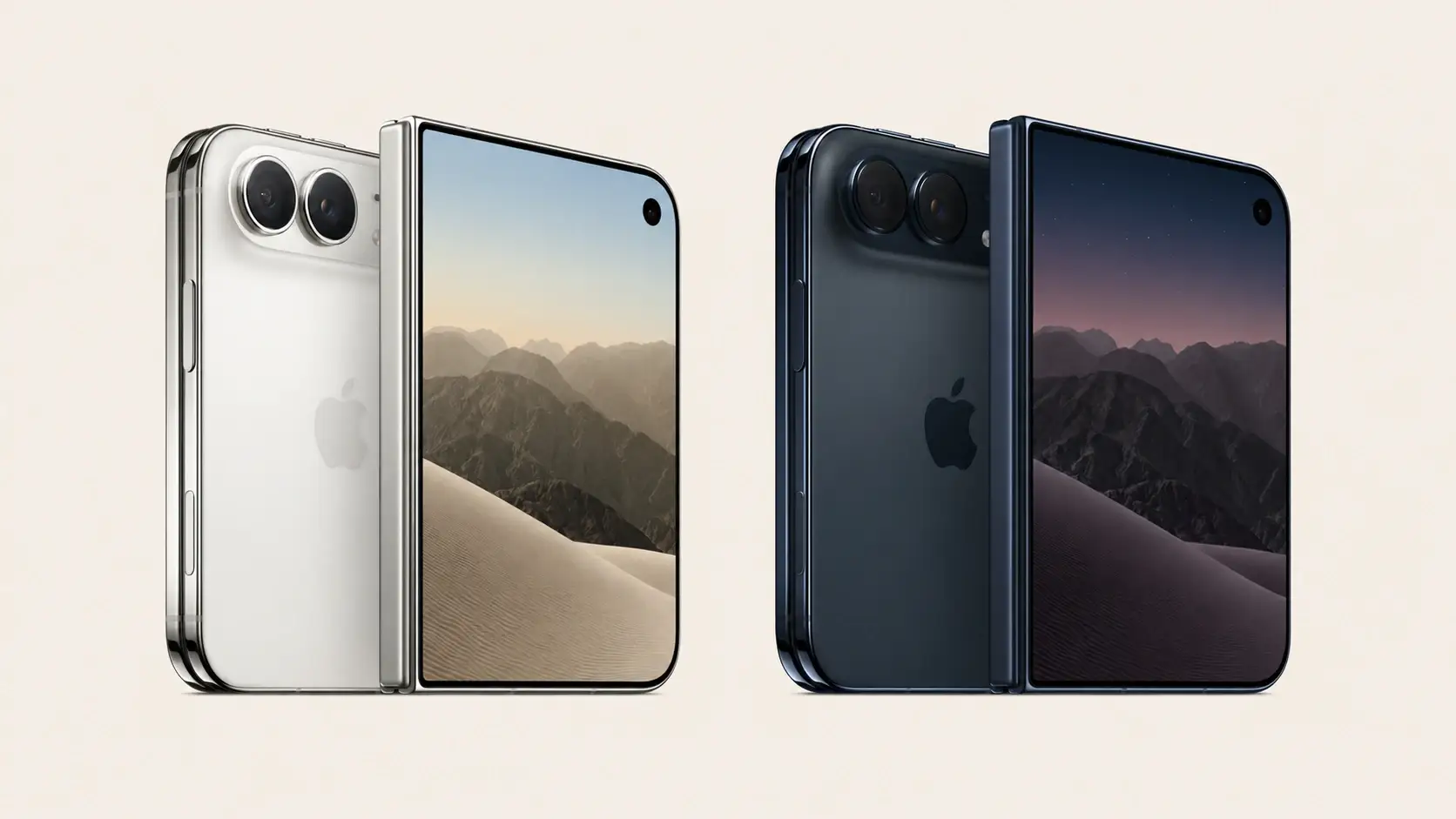
iPhone Duo opens to a 7.6-inch inner display and closes to a 5.4-inch outer screen. Apple says it is its first foldable iPhone and lists US preorders from October 16 at 5 a.m. PT, with availability beginning October 23.[1] The price ladder is blunt: 256GB begins at $1,999, 512GB at $2,199, 1TB at $2,599 and 2TB at $3,199.[3]
The premium is not an engineering footnote. Apple is making screen area and sustained performance commercially meaningful together. The inner display can hold a recording, transcript, extracted actions and human confirmation without turning AI into a full-screen answer machine.
The economic prize is third-party work that benefits from this layout: an interview app that records in one pane while a user corrects a private local transcript in another, or a field-service app that extracts a checklist and waits for approval. These are imagined workflows, not announced integrations.
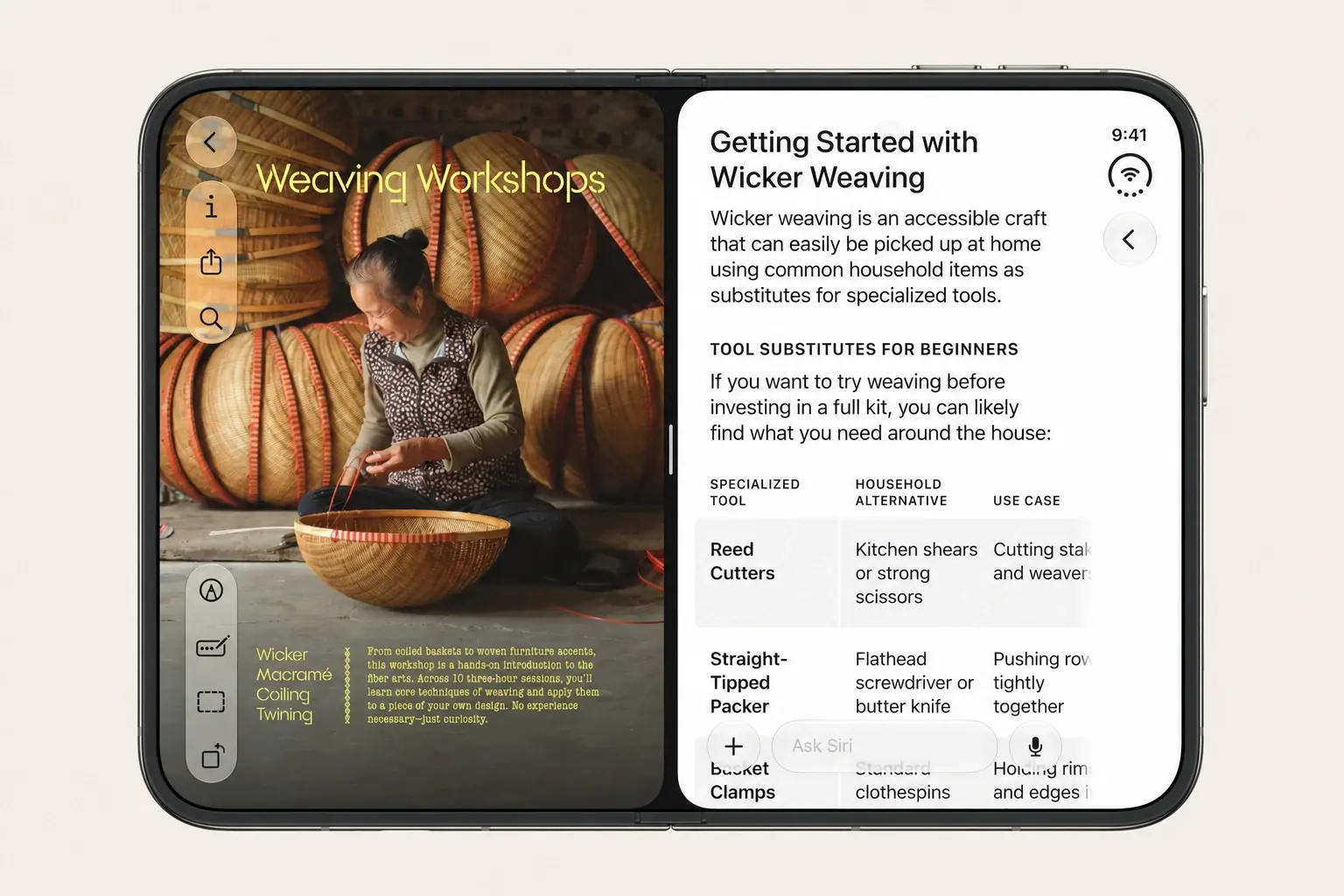
Apple is also using the regular line to make this an architecture shift, not a one-device experiment. iPhone 18 Pro begins at $1,199 in the US and arrives on September 18 with the same A20 Pro and redesigned vapor chamber.[4][8] Duo is the price umbrella. Pro is the volume path.
The Apple AI Hardware Ladder
US list prices before sales tax and Apple-stated architecture claims, current as of September 10, 2026.
$800 above the $1,199 iPhone 18 Pro entry price.
Apple comparison with A19 Pro. No absolute GB/s number was published.
$20 above the standard $129 AirPods 5.
A20 Pro: More Room for Work That Stays Local
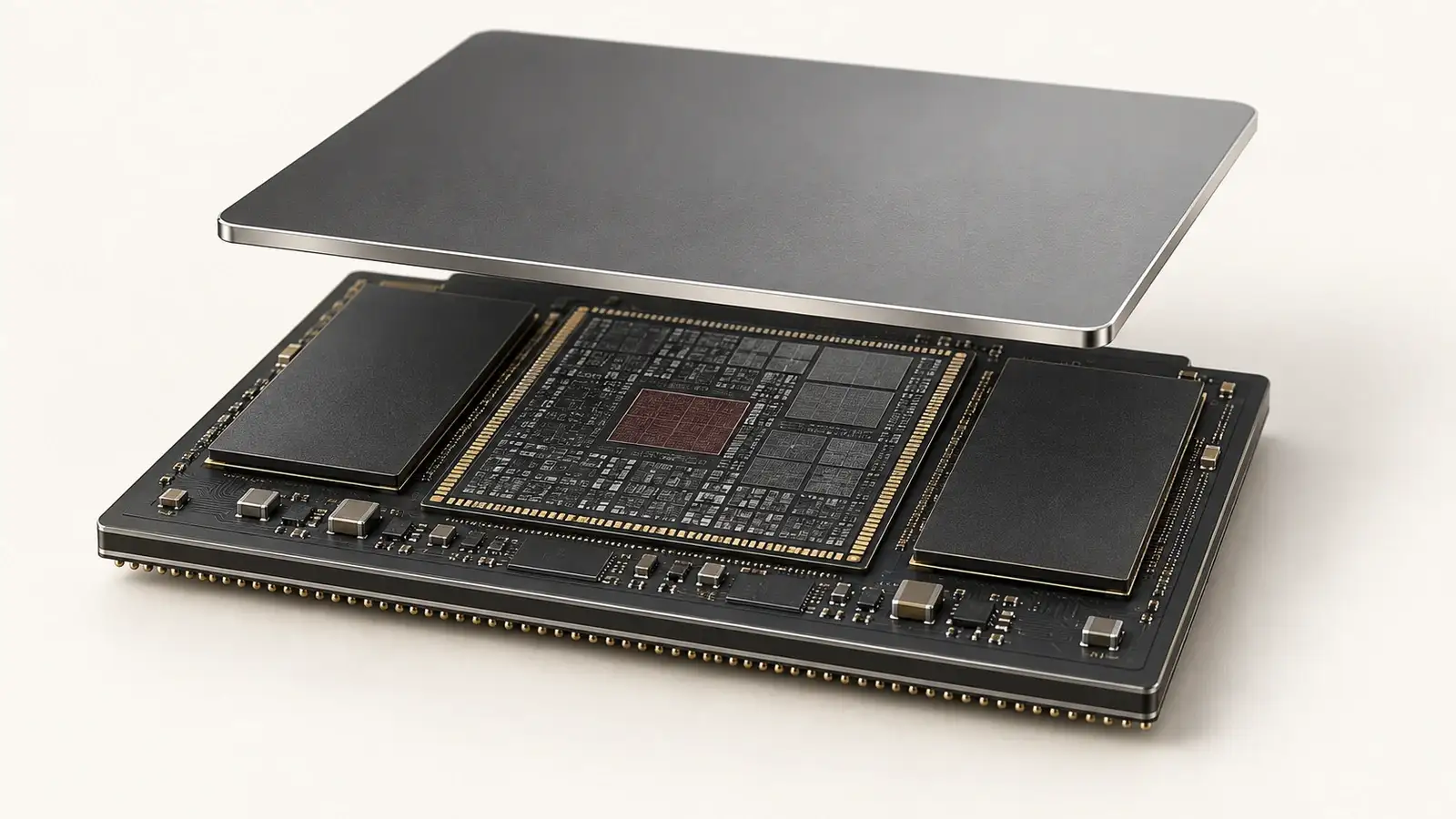
Apple says A20 Pro uses a 2-nanometer process, six-core CPU, seven-core GPU with Neural Accelerators and Dual 16-core Neural Engine. Against A19 Pro, Apple claims up to 20% faster CPU performance, up to 40% faster GPU performance, 50% more memory bandwidth and twice the Neural Engine compute.[1]
Memory bandwidth is especially relevant to a language model repeatedly reading weights while generating text. Cooling matters when the task lasts longer than a demo. Apple says iPhone 18 Pro’s vapor chamber has three times the surface area of iPhone 17 Pro’s, supporting up to 40% better sustained performance in Apple’s system comparison.[4] These are hardware gains; actual transcription or generation speed depends on the model, runtime and phone.
The business case is straightforward. A local model trades a recurring inference bill for a download, device memory, battery use and developer support. A frequent, predictable feature can make that trade worthwhile. Our A20 Pro comparison with previous Apple and Android chips examines the architecture in depth; the interactive chip explainer shows how those pieces work together.
AirPods 5 Extends the Interface: The Ears Are Not the Compute
AirPods 5 is the revealing companion launch. Apple lists it at $129, or $149 with Wireless Charging Case, from September 18 in the US.[5] The latter adds volume swipe, a Find My speaker and up to five hours of ANC listening, versus up to four hours for the standard model. Apple claims up to 1.5 times more ANC than AirPods 4 with ANC.[5]
The commercial move is a lower-friction assistant interface. A person can capture a thought, ask a question or hear a translated phrase without first turning the phone into a terminal. The paired iPhone still supplies eligibility, networking, app context and much of the computation.
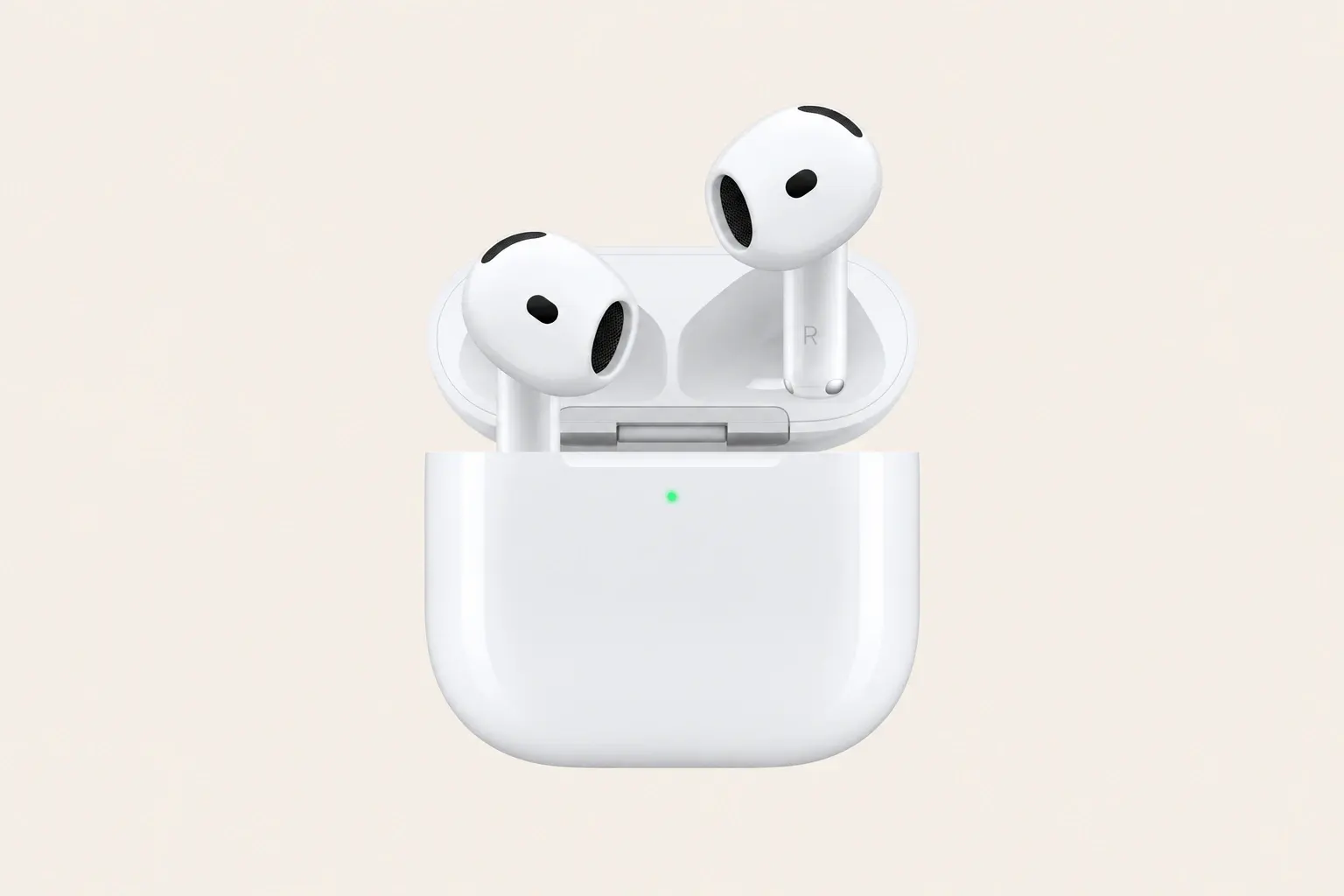
That qualification is material. Apple says Live Translation with AirPods 5 requires an Apple Intelligence-enabled iPhone running iOS 26 or later, and limits it to selected languages and regions. The product page says Siri AI is rolling out in English and that usage limits may apply.[5] Apple’s launch release says hands-free Siri AI access works on all AirPods, so it should not be presented as a new AirPods 5-exclusive capability.[15] AirPods’ H2 chip enables audio features. It does not mean translation is universal, offline, or performed solely inside an earbud.
Small Models Make Narrow Apps Economic: The Missing Layer Is Product Discipline
Apple’s launch arrives as developers get stronger local-model building blocks. Desert Ant says its SDK launched with 18 models, including Voz for iOS and macOS.[10] Voz is a 467MB on-demand download based on NVIDIA Parakeet TDT 0.6B v3, with 25 listed European languages and 15-second windows for long recordings. Mandarin is not on that list.[11]
The right example is not an imaginary universal assistant. A private voice-notes app could make the download visible during setup, transcribe after recording ends, retain timestamps for search and editing, and avoid a per-minute transcription bill for that workflow. Desert Ant’s headline claim of 10 minutes in two seconds is a vendor-run batch result on an iPhone 17 Pro. It measures processing of a complete recording, not live-caption latency. The first Core ML specialization can take 20 seconds, according to Desert Ant, while subsequent loading is 0.2 seconds.[11]
The older test device matters: developers can serve an existing installed base instead of waiting for A20 Pro. Desert Ant’s public licence permits free use up to 100,000 monthly active devices per SDK, with unlimited inference within that tier; larger deployments need a custom agreement.[11]
Liquid AI offers the general-purpose counterweight. Its LFM2.5-230M is a 230-million-parameter instruction model with a 32,768-token context, 10 listed languages and a stated fit for data extraction and lightweight agentic pipelines, not reasoning-heavy math or code generation.[12] Liquid documents a route to embed GGUF models with llama.cpp in iOS apps, while identifying MLX as an Apple Silicon Mac format. Developers should follow that maintained route: Liquid’s LEAP SDK documentation now marks the SDK deprecated and recommends llama.cpp.[9][13]
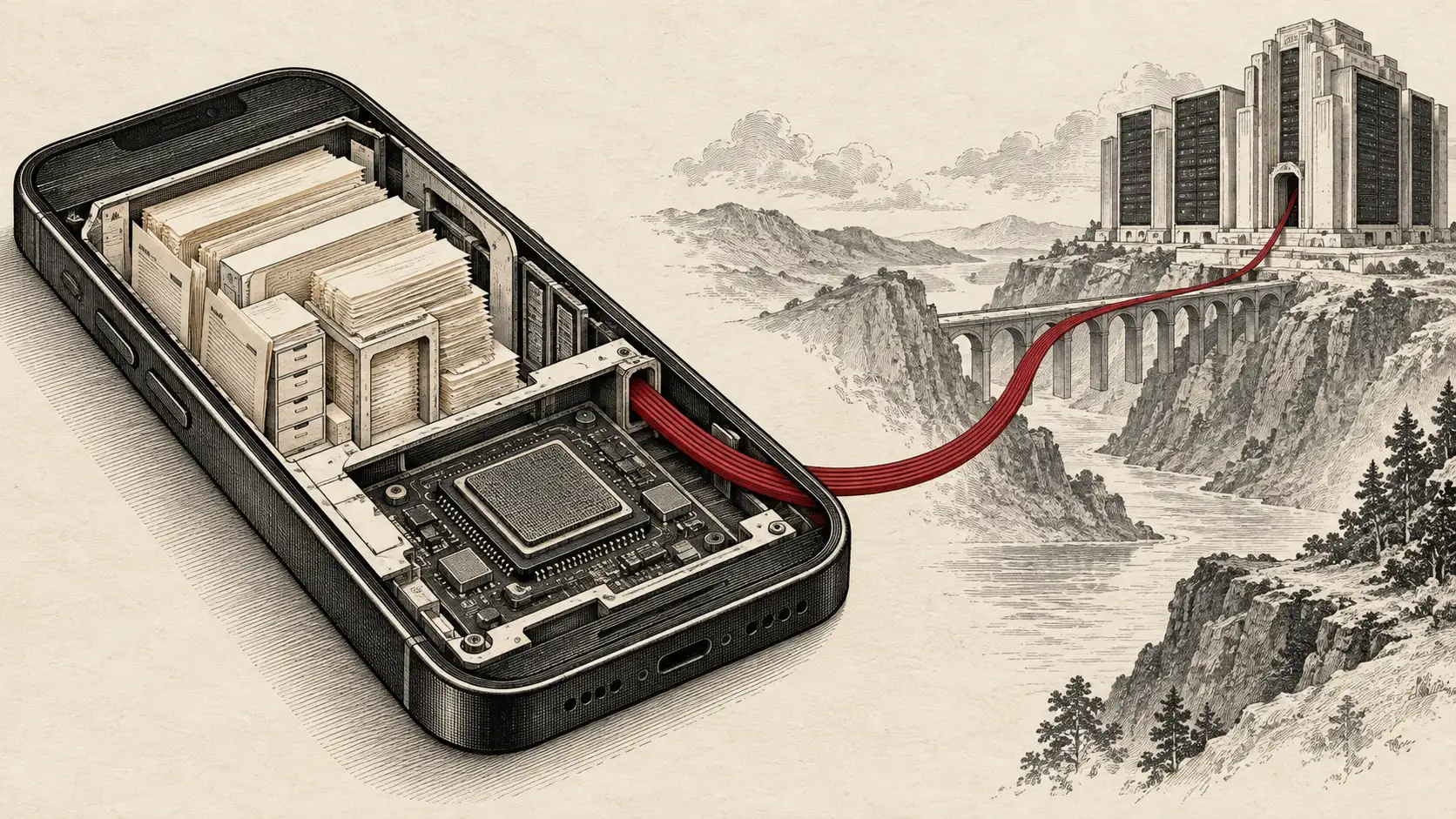
The uncomfortable truth is that local deployment moves responsibility onto the app maker. A travel product can use a small local model to extract dates and destinations into a structured draft, call only app-controlled functions, and send ambiguous planning to a remote service. It must still validate tool arguments, budget the KV cache, manage heat, disclose downloads and pay attention to licenses. Liquid’s 230M model uses the LFM Open License v1.0, which permits royalty-free use below a US$10 million annual-revenue threshold but is not Apache-2.0.[14]
Desert Ant and Liquid AI are independent developer options; neither has announced an Apple partnership in these sources. They make a practical app architecture possible: use a local specialist where the task is narrow, use a cloud model where the task is hard, and make the boundary visible to the user.
Siri AI Still Has To Earn the Upgrade: Apple’s Hybrid System Is a Product, Not a Promise
Apple says Siri AI can draw on personal context, onscreen content and broad world knowledge, and can use on-device Apple Foundation Models plus server-based models through Private Cloud Compute.[6] Apple says personal data is not stored or made accessible to Apple when Private Cloud Compute handles requests. That is a privacy architecture claim. It does not prove that a given response is accurate, that capacity is unlimited, or that a cloud-routed task has the same privacy properties as a local specialist model.
The rollout itself is a business constraint. Siri AI starts in beta in English, with French, Japanese, Korean, Portuguese and Spanish scheduled for October. Apple says it initially excludes the EU on iPhone, iPad and Apple Watch, and remains unavailable in China pending regulatory work. Server-based requests have daily limits; Apple says expanded access will come with a fee.[1][6] Our iOS 27 and Siri AI analysis covers that platform shift. The hardware launch does not remove these service conditions.
The Product Risk Is a False Boundary
Apple’s strongest local-AI story is not “everything stays on the phone.” It is a legible division of labor: local processing when a feature supports it, Private Cloud Compute when a request needs larger models, and explicit disclosure when availability, language, limits or data paths change. Developers who blur those boundaries will lose trust before they gain retention.
What iPhone Duo Changes For AI Apps
Treat iPhone Duo’s foldable display as an opportunity to build capture, review and approval into one workflow, not as a reason to enlarge a chatbot.
Use A20 Pro’s published gains as Apple comparative claims. Test the actual model, runtime, thermal state and task before making speed promises.
Design AirPods 5 as a paired interaction surface. Its translation and Siri capabilities depend on the iPhone’s eligibility, language and availability rules.
Use small local models for bounded work such as transcription, extraction and routing. Keep difficult, open-ended work and consequential actions behind deliberate controls.
Make the local-cloud boundary legible. Hybrid AI earns trust only when users can tell what their device, the network and the app are each doing.
The Opportunity: Turn Better Hardware Into a Daily Habit
Taken together, Duo, iPhone 18 Pro and AirPods describe three parts of a potential workflow: space to review the result, a phone capable of doing more of the processing, and a voice interface that makes starting a task easier. The $800 gap between Duo and Pro also matters. Developers can build around a shared A20 Pro architecture while treating the foldable display as an additional surface, rather than making an expensive new form factor the entire business case.
An interview app makes that opportunity concrete. It could capture audio, transcribe it locally, turn the transcript into a draft and let the user check each proposed action against the recording. A smaller phone could run the same process with a different layout. A cloud service could handle a difficult follow-up when the user chooses to send it. That is a product design to test, with clear reasons for every model, screen and network request.
Apple’s launch supplies more room to build that kind of experience. Desert Ant and Liquid AI supply independent examples of how small models can fill it. The commercial prize is a task people finish often enough that local speed, privacy and predictable costs become reasons to keep the app. A foldable can sell the first impression. Useful work has to earn the daily habit.
Sources & References
Primary Apple, Desert Ant and Liquid AI materials. Vendor measurements and availability commitments are attributed as such.
| # | Source | Outlet | Date | Key Takeaway |
|---|---|---|---|---|
| 1 | Apple Newsroom | Sep. 9, 2026 | Duo announcement, A20 Pro claims, and Apple Intelligence/Siri availability statements. | |
| 2 | Hyperliquid public API | Sep. 10, 2026, 03:09:07 UTC | Recorded mark US$316.93 and oracle US$317.00 for XYZ’s Apple-linked perpetual. | |
| 3 | Apple US Store | Sep. 2026 | US price ladder and October 23 availability. | |
| 4 | Apple Newsroom | Sep. 9, 2026 | A20 Pro packaging, vapor-chamber and sustained-performance claims. | |
| 5 | Apple US Store | Sep. 2026 | US prices, availability, ANC/battery claims, paired-iPhone dependency and Siri limits. | |
| 6 | Apple Newsroom | Jun. 8, 2026 | Hybrid architecture, beta status, regional constraints and compatible-device scope. | |
| 7 | Apple | Sep. 2026 | US feature date, English rollout and Private Cloud Compute statements. | |
| 8 | Apple US Store | Accessed Sep. 10, 2026 | $1,199 starting price for iPhone 18 Pro. | |
| 9 | Liquid AI | Accessed Sep. 10, 2026 | The deprecated SDK documentation directs developers to llama.cpp. | |
| 10 | Desert Ant | Sep. 8, 2026 | Launch of 18 models in the SDK family. | |
| 11 | Desert Ant | Accessed Sep. 10, 2026 | iOS/macOS transcription package, download size, languages and scoped vendor benchmark. | |
| 12 | Liquid AI | Accessed Sep. 10, 2026 | 230M model scope, context size and recommended workload fit. | |
| 13 | Liquid AI | Accessed Sep. 10, 2026 | Documented on-device embedding route, including iOS. | |
| 14 | Liquid AI | Accessed Sep. 10, 2026 | Royalty-free threshold and license conditions for LFM2.5-230M. | |
| 15 | Apple Newsroom | Sep. 9, 2026 | AirPods 5 launch details and the scope of hands-free Siri AI access across AirPods. |
Last updated: September 10, 2026